• 2012 Morocco Itinerary
  • About me, Jane
  • Japan 2010 Itinerary
  • Morocco 2013 Itinerary

See Jane Travel

See Jane Travel

Monthly Archives: April 2012

Hammam

22 Sunday Apr 2012

Posted by seejanesblog in Morocco

≈ Leave a comment

Tags

marble slabs

Descended from Roman baths and modeled after Turkish baths, hammam were originally patronized by Moroccans whose homes lacked indoor plumbing. The baths also are rooted in the Islamic ritual of ablution: Muslims wash distinct parts of their body before their daily prayers. With modernization, though, the hammam have morphed into soak-and-socialize centers. Pronounced ‘ha-mom’, it’s a place to go to bathe around other people. A real experience.

Barbara and I intended to go to a public hammam where local women go. We were told it was open until 9p.m. every day so we arrived just before 7. But we were turned away. We’re not sure why. Maybe because we were tourists? Or maybe because we sauntered in with Mokhtar and women without their heads covered were thrown in to a tizzy of screaming and scattering?! Who knew we weren’t supposed to walk in there. With a man. Unannounced.

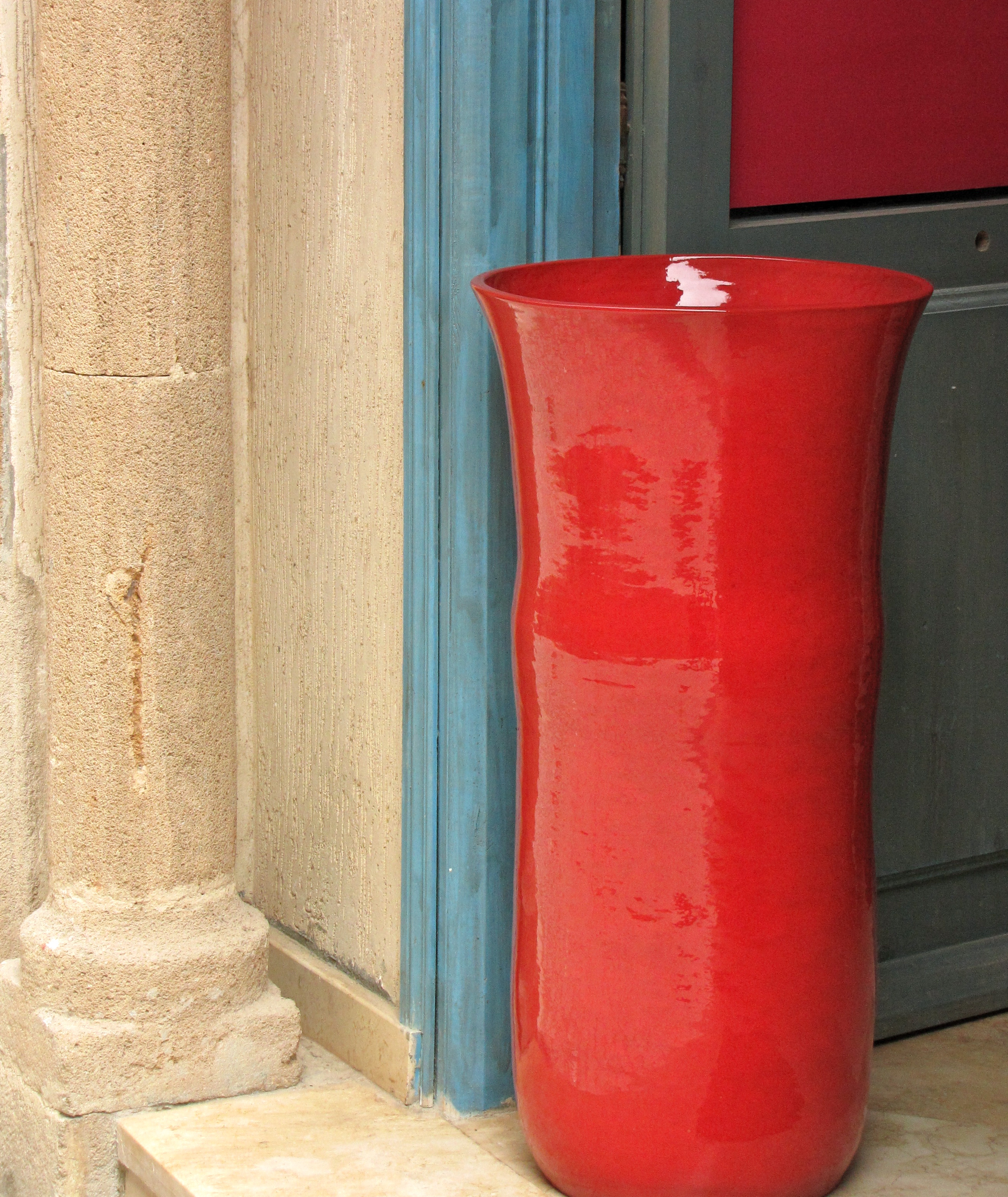
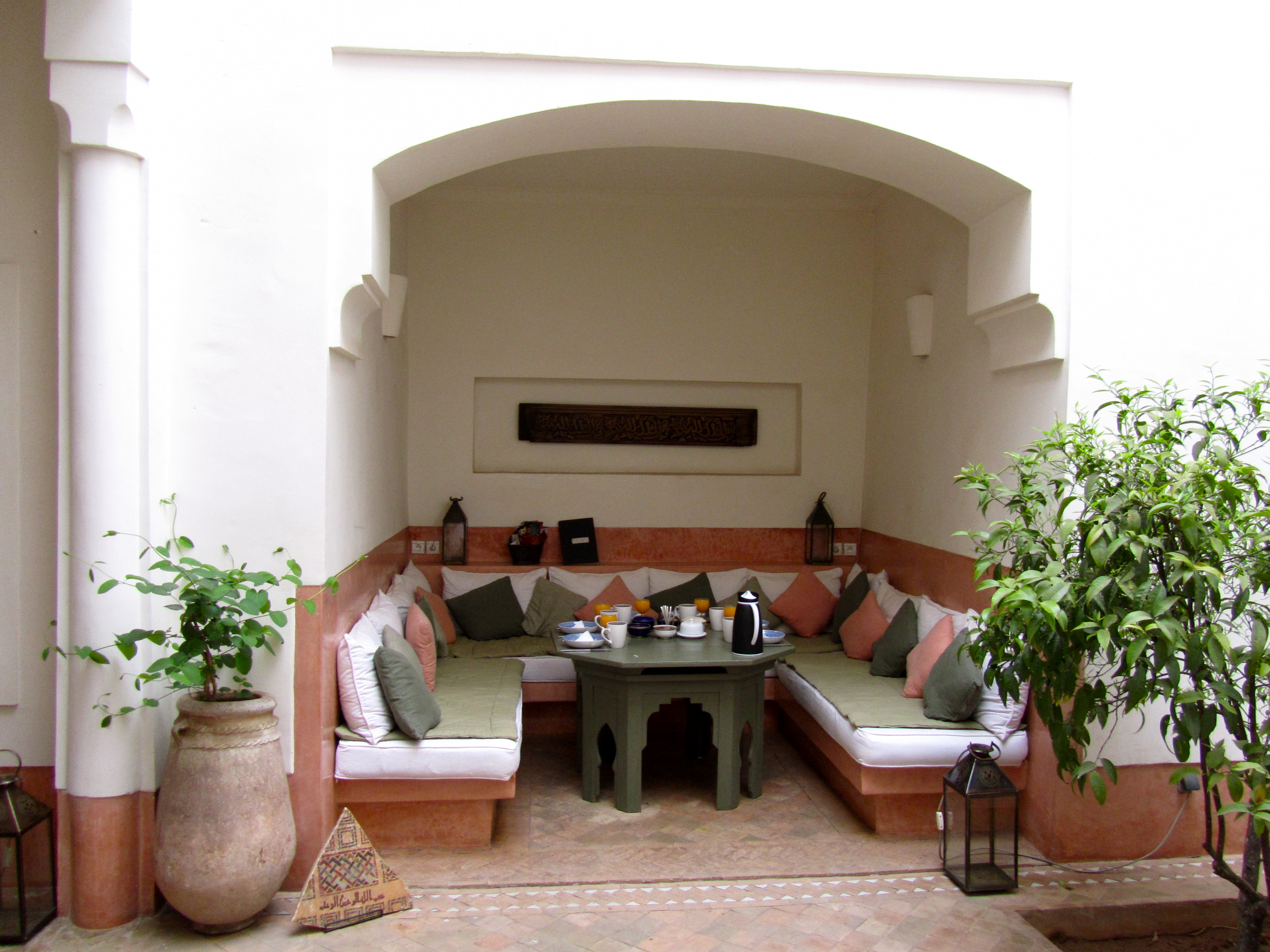
So we went to a tourist hammam instead. It wasn’t fancy but it was filled with women from the West. The entry was beautiful with brightly colored upholstery and fabrics all over; very welcoming and what we think of as Moroccan. We selected our services: a bath, a scrub, and a massage; and paid the 400 dirham fee, or $46.00 for two of us and we were ushered in to a dressing room where we removed our clothing and were handed a small (very small) piece of fabric on a string as a “covering.”

It all happened so fast. One minute I was behind a cranberry-colored silk curtain fully clothed and the next I was standing in a room with a string and fabric around my lower parts, fully exposed to my friend and everyone else in the room. There wasn’t hardly even any time to be embarrassed since we were whisked away to a room with marble slabs and steam. I do remember, though, being somewhat relieved to know Barbara was without her eyeglasses. “I hope she’s blind as a bat,” I remember thinking. (Note: while Barbara can’t see clearly without her eyeglasses, she later mentioned that she looked at me once and saw, and I quote, “A big blob with a string digging in to it.” And that, my friends, is how she described me in the hammam!)

We were each paired with an attendant who would be with us for the remainder of the visit. Our attendant ushered us first in to a room with arches and columns and marble all around – – big slabs of marble. The floors were wet and slippery. I cautiously skated my almost naked self to a slab and ungracefully eased myself down, making myself as comfortable as possible on a slab of marble in a room with other mostly naked women. Soon, though, the steam was turned on and everything became foggy and unclear and I became more comfortable. It was here that Barbara and I were able to really talk in private about the things we had wanted to discuss. The hammam is a place for socializing – – and for this reason alone I can see its benefit. After about 30 minutes of steaming and relaxing and becoming comfortable with my nakedness, the attendants came in and rubbed our bodies with olive oil soap – – a dark greenish/black “soap” that’s really just like semi-mashed olive pits and skins. It smells like olives and has a roughness that exfoliates. And when I say exfoliate, I mean exfoliate! Oh my gosh. It was unbelievable. First of all, it felt great. She slathered on this stuff all over me and scrubbed the living daylights out of me but it didn’t hurt. In fact, I uncontrollably groaned during this process. It was unreal. And then I happened to feel my skin and noticed a thick and bumpy residue on it. Thinking it was the olive oil soap, upon closer inspection I realized it was skin! Exfoliated skin! All over my body. It was everywhere. I couldn’t believe what I was seeing! It looked like strands of spaghetti. And I was surprised there was any skin even left covering my bones! I have never experienced anything like it.

From the steam bath we were ushered in to another room. ‘Ushered’ is the wrong word. We were ‘skated’ in to a different room. The floor was so wet and slippery and my skin so slippery from the olive oil soap that I greasily clung to my attendant for dear life. How she supported me even that short distance to the next marble slab is beyond me. It was in that other room where she attacked my feet with some kind of sharp tool that made me do this crazy kind of a scream-laugh for the next few minutes! I giggled until I could hardly catch my breath. And just when it started feeling good she switched feet and I went through my contortions all over again! Barbara wasn’t in the room yet so didn’t know what was going on. I hardly had the time to tell her before she started doing the same thing! Hilarious! We were doused again with hot water all over and under and around every part of ourselves and then ushered in to a shower where we were able to wash our hair and rinse ourselves off in private (something not offered at a public hammam or one where the local women go). Next stop: the massage room for a 30 minute round of naked massage. This was fantastic and I was able to really relax and enjoy the whole experience. She even did my stomach, which is an area most massage therapists in the states don’t do. It was nice. When finished, my relaxed self leaned on her for support through the rooms with wet slippery floors and then she said goodbye to me, hugged me, and smiled. It was meaningful and beautiful. A bond had been formed for each of us and it was nice to acknowledge it. Girl power. Common bond. Naked-is-naked no matter what country you’re in. Beautiful.

I redressed and laughed at the fabric-attached-to-string that I had been wearing and we left to meet Mokhtar outside in the rain waiting for us to bring us home. Barbara could hardly stay awake and barely made it home to the riad before she fell in to bed relaxed. Meantime, Richard, Mokhtar and I went to dinner at my favorite place in the new town near the university for tajine, bread, and harissa. It was fun to show the place to Richard and to hear his raves about the food! What a great place to eat. The sad thing is, while I know how to get there, I don’t remember the name of it. But I will return there again; it was so good and in such a great location! We were all so tired that we didn’t last long at dinner before we returned and went to bed, happy and relaxed.

Share this:

  • Tweet
  • Click to email a link to a friend (Opens in new window) Email
  • Click to print (Opens in new window) Print
Like Loading...

A racetrack doubles as a highway

22 Sunday Apr 2012

Posted by seejanesblog in Stuff worth knowing

≈ Leave a comment

Whilst driving to Essaouira we were on a road that went through what looked like a racetrack. In fact, all the seats were facing us, or the highway/road, as though we were on the track itself. Turns out we were! When it’s not in use for a car race, the track itself is just the regular highway or road out of town. Apparently it’s closed off and becomes part of the racetrack when there is a race going on. Here’s what Wiki says about it:

‘The Marrakech Street Circuit (also known as Marrakech Racetrack) is a 4.624 kilometres (2.87 mi) temporary street circuit in Agdal district, Marrakech, Morocco. The circuit is venturing by MGP. MGP’s partner in Morocco, D3 Motorsport Development has been given the responsibility of the design of the street circuit. It is the same architect company that designed the Surfers Paradise Street Circuit in Australia. Groupe Menara was supervising the construction in Route de l’Ourika and along Boulevard Mohammed.The paddock had been paved along the walls of the Royal Garden and more than 2500 concrete impact blocks and many debris fence panels had been put in place to bound the track. The 2009 World Touring Car Championship season’s third round at the street circuit was held on 3 May 2009. It was the first international car race in Morocco since the 1958 Moroccan Grand Prix at the Ain-Diab Circuit in Casablanca.’

Share this:

  • Tweet
  • Click to email a link to a friend (Opens in new window) Email
  • Click to print (Opens in new window) Print
Like Loading...

The jewel of Morocco

22 Sunday Apr 2012

Posted by seejanesblog in Morocco

≈ Leave a comment

Tags

fish shops, international tourists

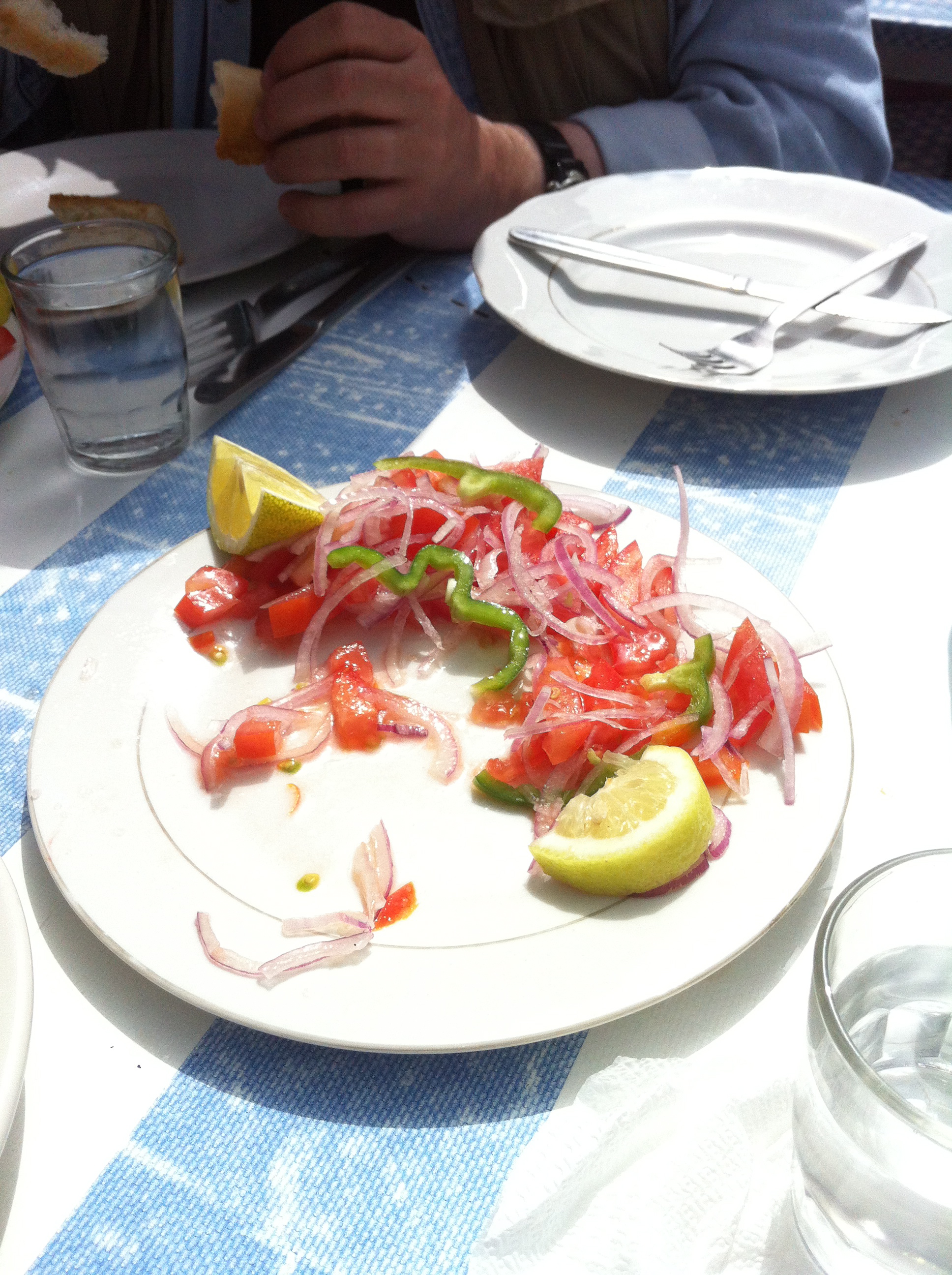
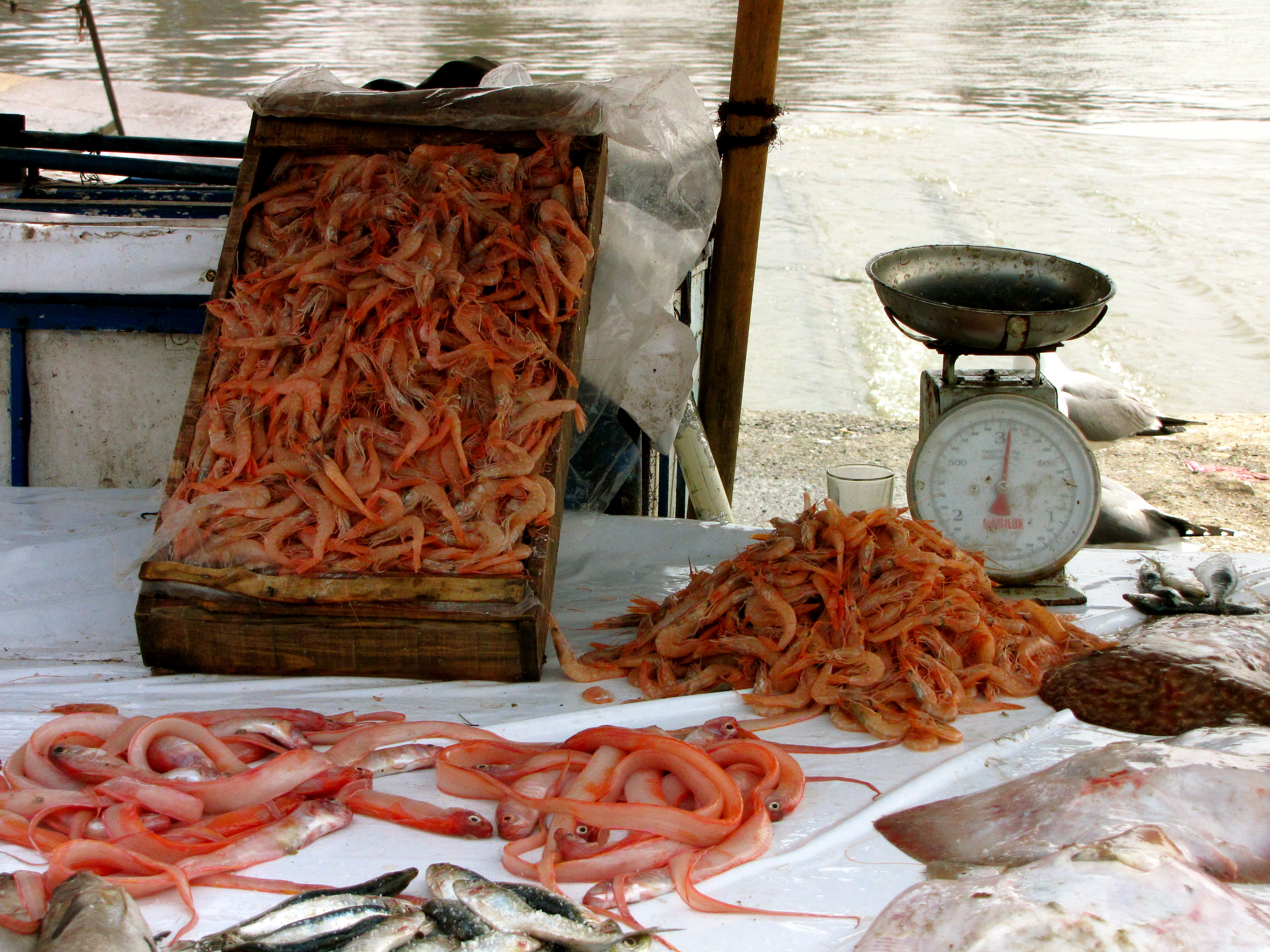
After walking around Essaouira and enjoying the day together, we went back to the seaside and had a lunch of Moroccan salad, the fresh catch of the day and Coca-Cola. There are a bunch of little fish shops set up all around on the beach where you pick your spot on a picnic table, select your waiters, and then choose from the fresh catch of the day and, voila! Lunch is served! There are also roving musicians who serenaded us whilst we ate. All the while the waves crash on the shore not too far away, the sun shines down, and we continue to be joyful. Richard’s toast was fitting: To our continued adventure with new friends! And then we dined on fresh squid, fresh sea bass, prawns, and sardines! Tres bon.

\

After lunch we realized we needed to hit the road if Barbara and I were going to make our hammam visit that evening. So we popped in the CDs Mokhtar and Richard just purchased and headed back to Marrakech. I was sad for the day to end. But I was also looking forward to everything that was still before me. Especially the hammam experience.

The music made me emotional. I couldn’t deny that this portion of the trip was almost over. The relationships with the people I had spent so much time with were important to me already and the thought of not seeing them regularly was already sad for me. I’m never good at goodbyes, that’s a fact. As a child I cried when we sold a car, a piano, or left a hotel room. But add music to the mix and I become a real wreck. Only Barbara knew how emotional I really was there in the back seat.

We continued to drive and listen and it was soon evident to me that Mokhtar was becoming tired so we stopped at a roadside bus stop for coffee. As we pulled in to the parking lot Barbara and Richard and I were aghast at the tourist buses that were stopped there! Mokhtar never takes us to touristy places so we were hesitant – – until he reminded us that these are Moroccan tourists. Ah! No problem then! We’re fine with Moroccans; just not international tourists. It was a very fun stop because we were able to see so many people in colorful garments eating and socializing before they embarked the bus for faraway places in Morocco. Mokhtar said some of the buses would take 10 hours to reach the destination! And they were packed-full. This stop was notable, too, because people were interested in eavesdropping in on our conversation, I noticed. A few people positioned themselves close by and smiled at some of the things we were laughing and talking about. Also, there were so many cats. So. Many. They were eating the scraps of fish and whatnot people were throwing them and it was quite gross. They were mangy and skinny and feeble. Why I don’t know. They seemed to have unlimited amounts of food at this place from travelers yet still they looked scrawny. I figure they must’ve been sick and steered clear of them at all cost.

It was on the way home that we were stopped by the police again. This time because Barbara and I were not buckled in the backseat; which we didn’t know was a law. It was an annoyance and we felt bad that it happened but we didn’t know. It was also on our way home that we saw the king and his motorcade! It was very exciting for Mokhtar, who has mentioned several times that he’d like to meet the king. Mohammad VI has a good reputation with the people. He is a young king and very active in Moroccan life, with many sightings of him out and about with his children, participating in normal life. Since I don’t know much about him I think I will do some research and will perhaps post something about him here if it seems interesting.

We continued on until we were in Marrakech and looking for our hammam. I will save this for the next blog entry! What an experience the hammam was!

Share this:

  • Tweet
  • Click to email a link to a friend (Opens in new window) Email
  • Click to print (Opens in new window) Print
Like Loading...

I swear, Essaouira!

22 Sunday Apr 2012

Posted by seejanesblog in Morocco

≈ Leave a comment

Tags

sidi mohammed

OK, bad play on words for this title, I’ll admit, but since ‘Essaouira’ is pronounced as ‘eh-sweer-uh’, I thought it was kind of funny. It’s like the town of Ouarzazate sounding like ‘where-zuh-zaht’ or ‘where is that?’ I wonder how many other towns in Morocco sound like stuff? I do know that the Berber people are called Amazigh and every time I saw that word I thought of ‘amazing.’ It’s still how I pronounce it when I see it. (The word means free man, noble man or defender.).

This is part 2 of my post about Essaouira. It was such a beautiful city and a full day that I’m doing it in multiple parts. We visited the seaside first; the first sea views or really even water views that I’ve had since arriving in Morocco. And it was beautiful! There’s something about the sea and water for me: the movement, the smells, the sounds, the cool air – – everything! And all of this in the ancient city of Essaouira with its crumbling buildings and rich history. Simply amazing.

Most of the buildings around today are from the 18th century. In the mid 1760’s, the Sultan Sidi Mohammed bed Abdallah installed himself here so he could have his corsairs go and attack the people of Agadir who rebelled against him. He hired a French architect, Theodore Cornut, to create a city in the middle of sand and wind, where nothing existed. The port soon became a vital link for trade between Timbuktu and Europe. It was a place where the trade in gold, salt, ivory, and ostrich feathers was carefully monitored, taxed and controlled by a garrison of 2000 imperial soldiers.
By 1912 the French had established their protectorate, changed the town’s name back to Mogador and diverted trade to Casablanca, Tangier, and Agadir. It was only with independence in 1956 that the sleepy backwater again became Essaouira. After Orson Welles filmed Othello here, and since Jimi Hendrix paid a fleeting visit and the hippies chose Essaouira as a hang out, the town has seen a steady flow of visitors, from artists, surfers and writers to European tourists escaping the crowds of Marrakech.

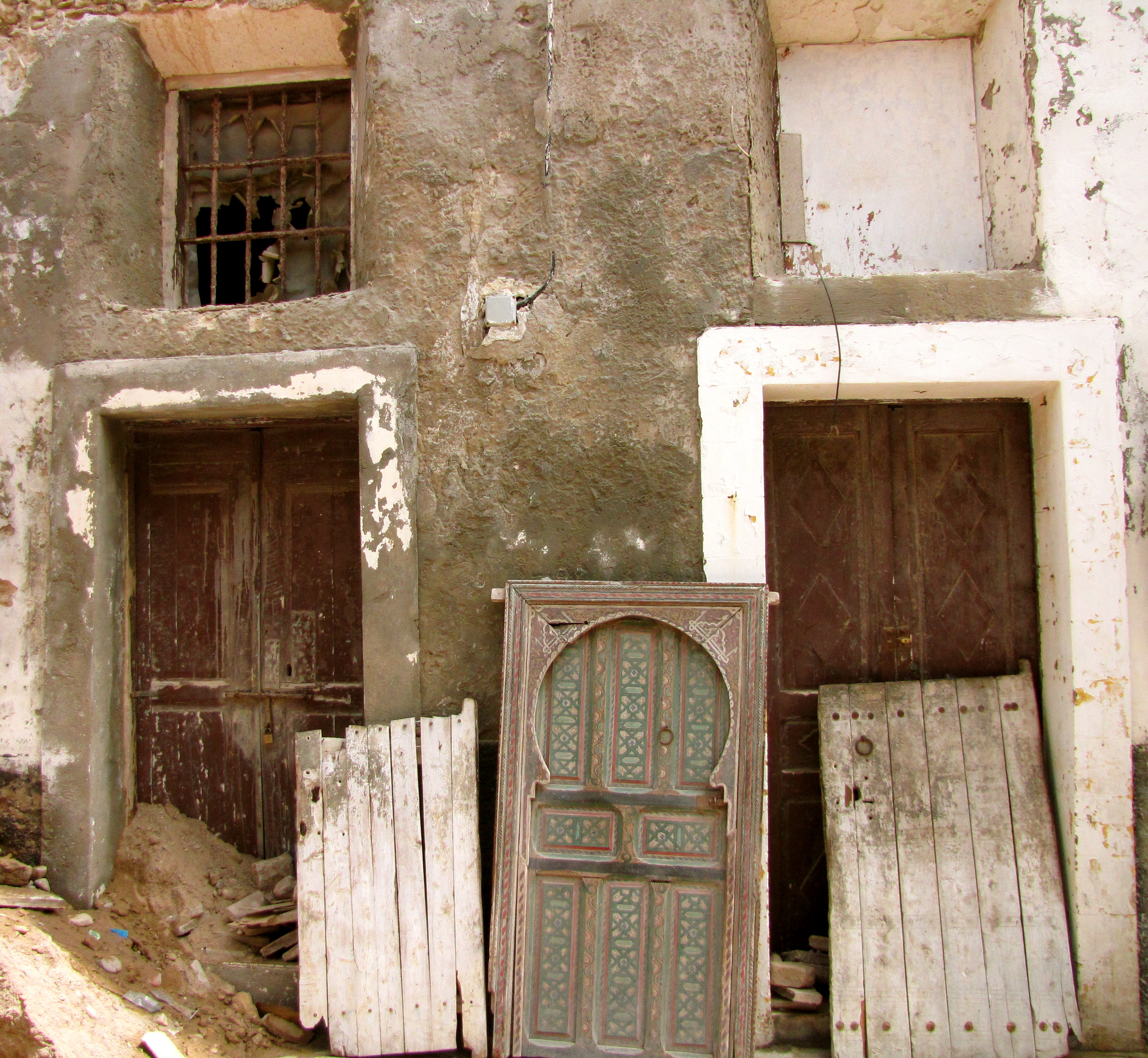
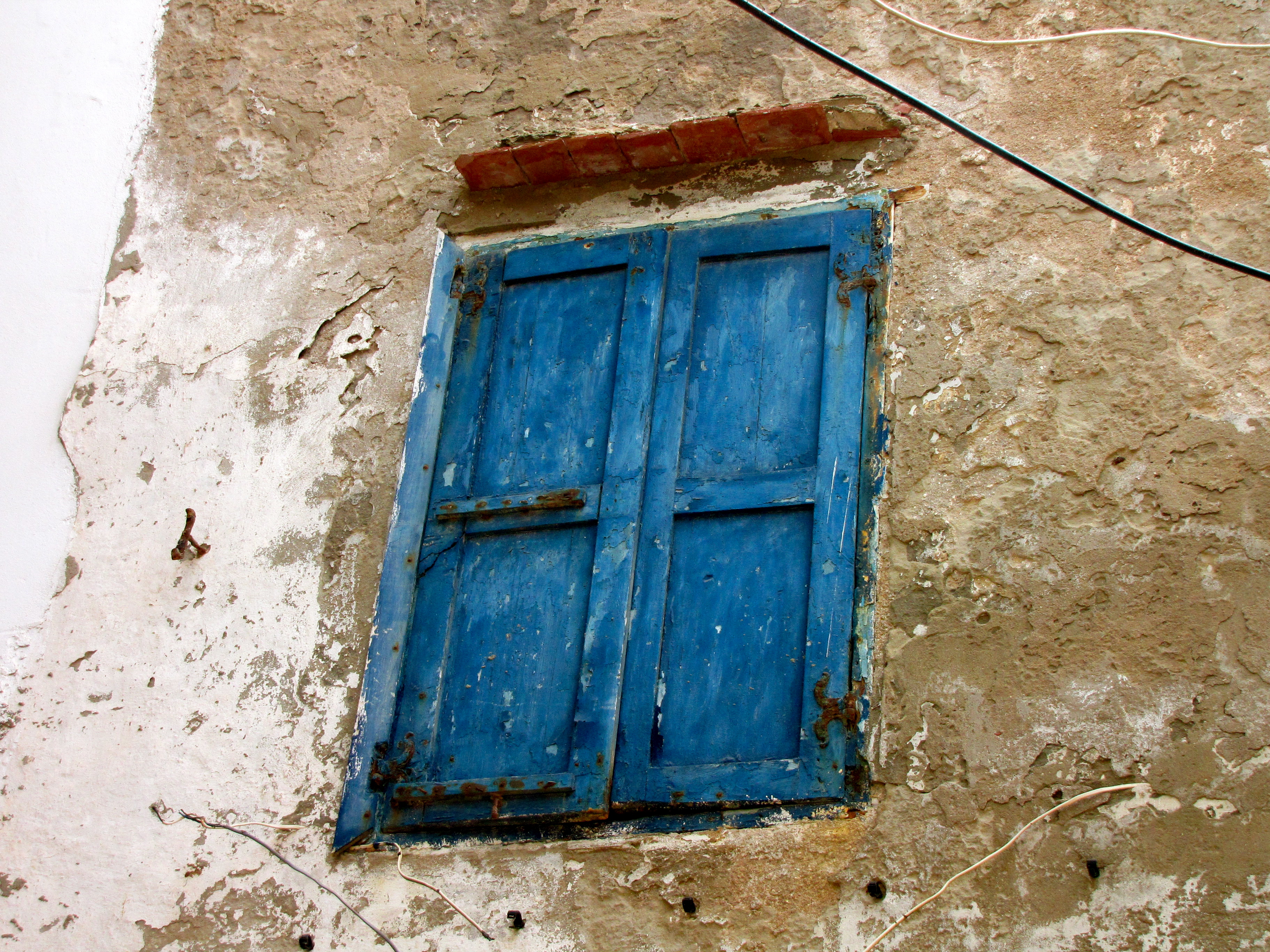
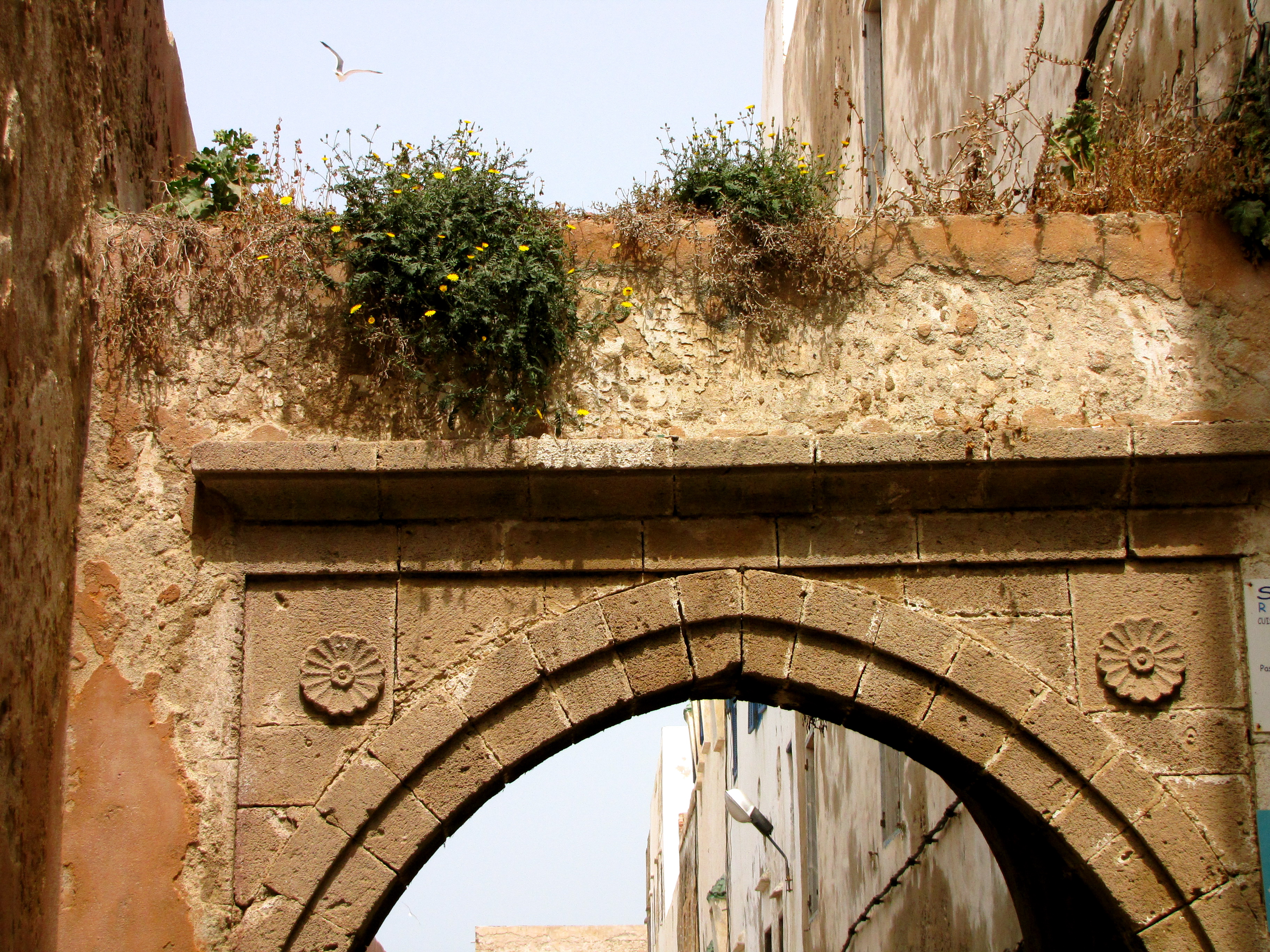
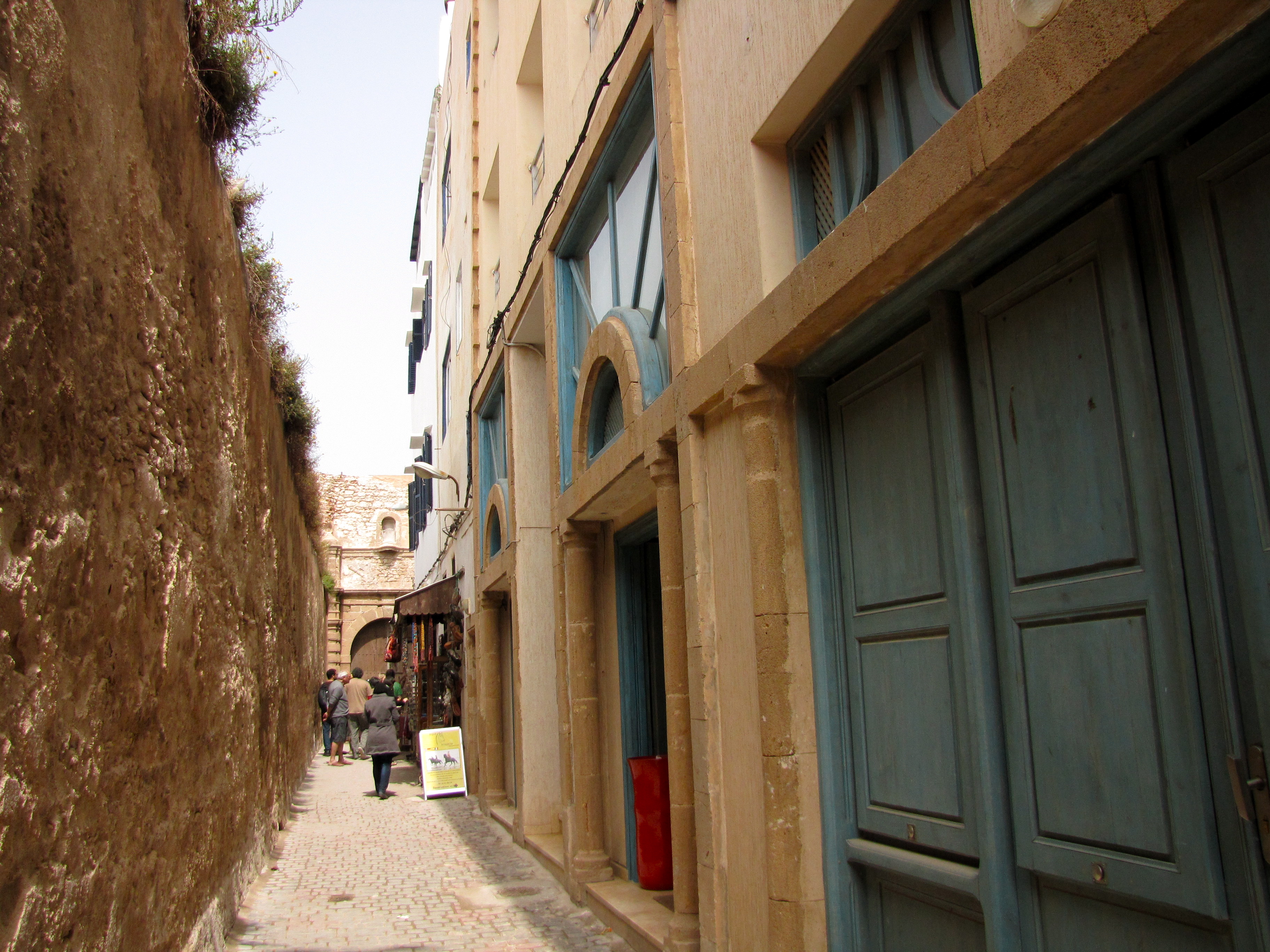
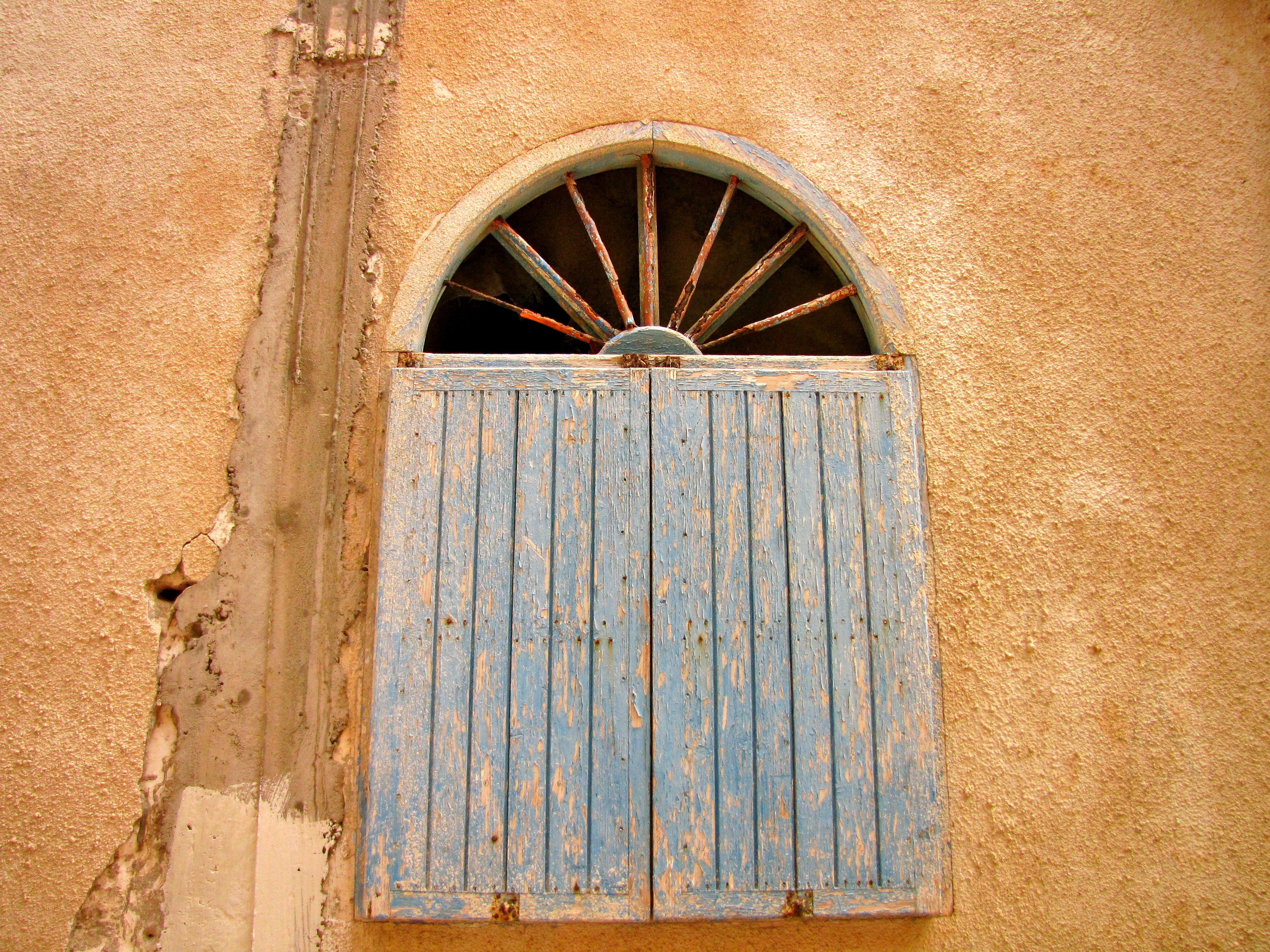
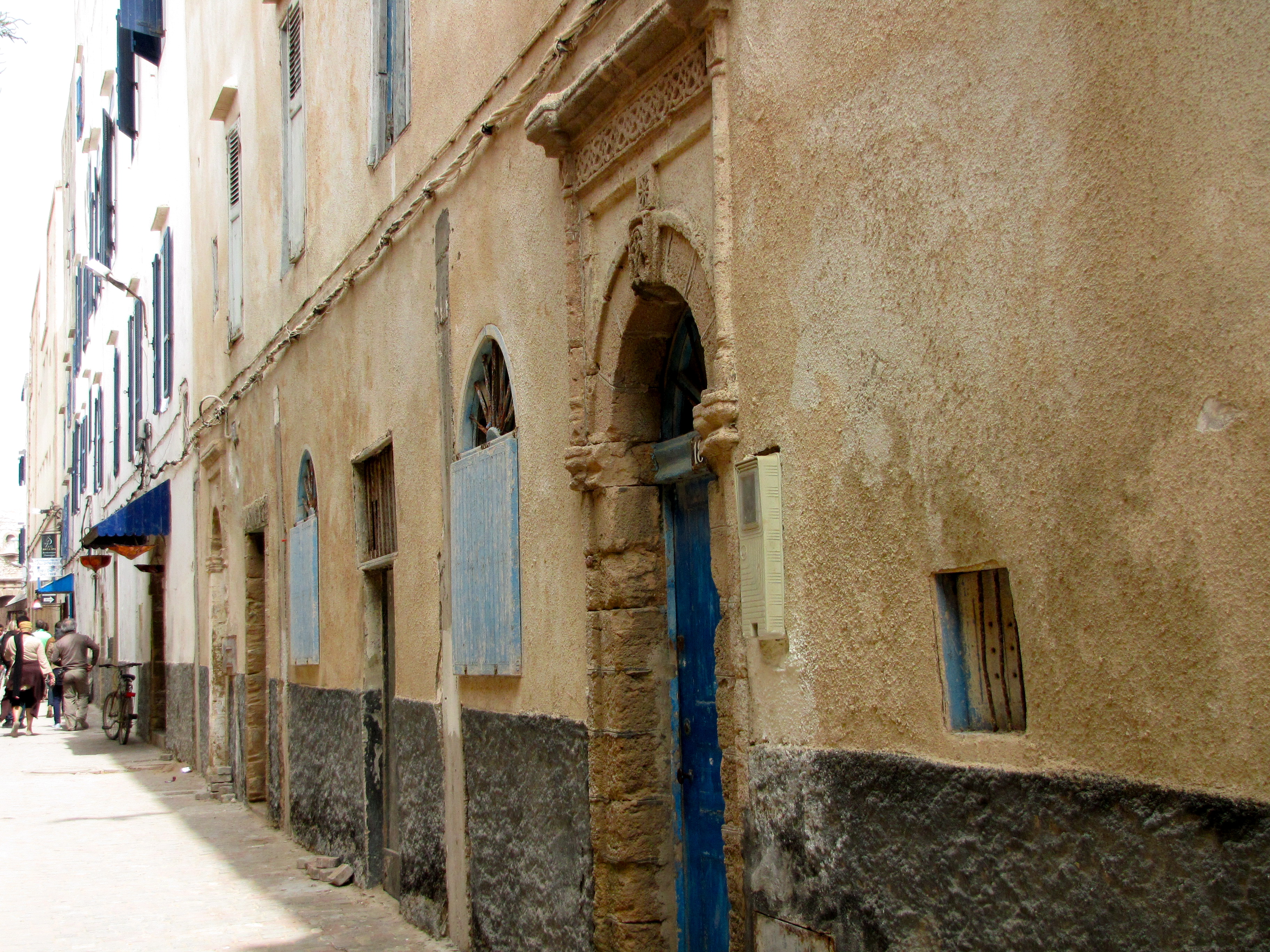
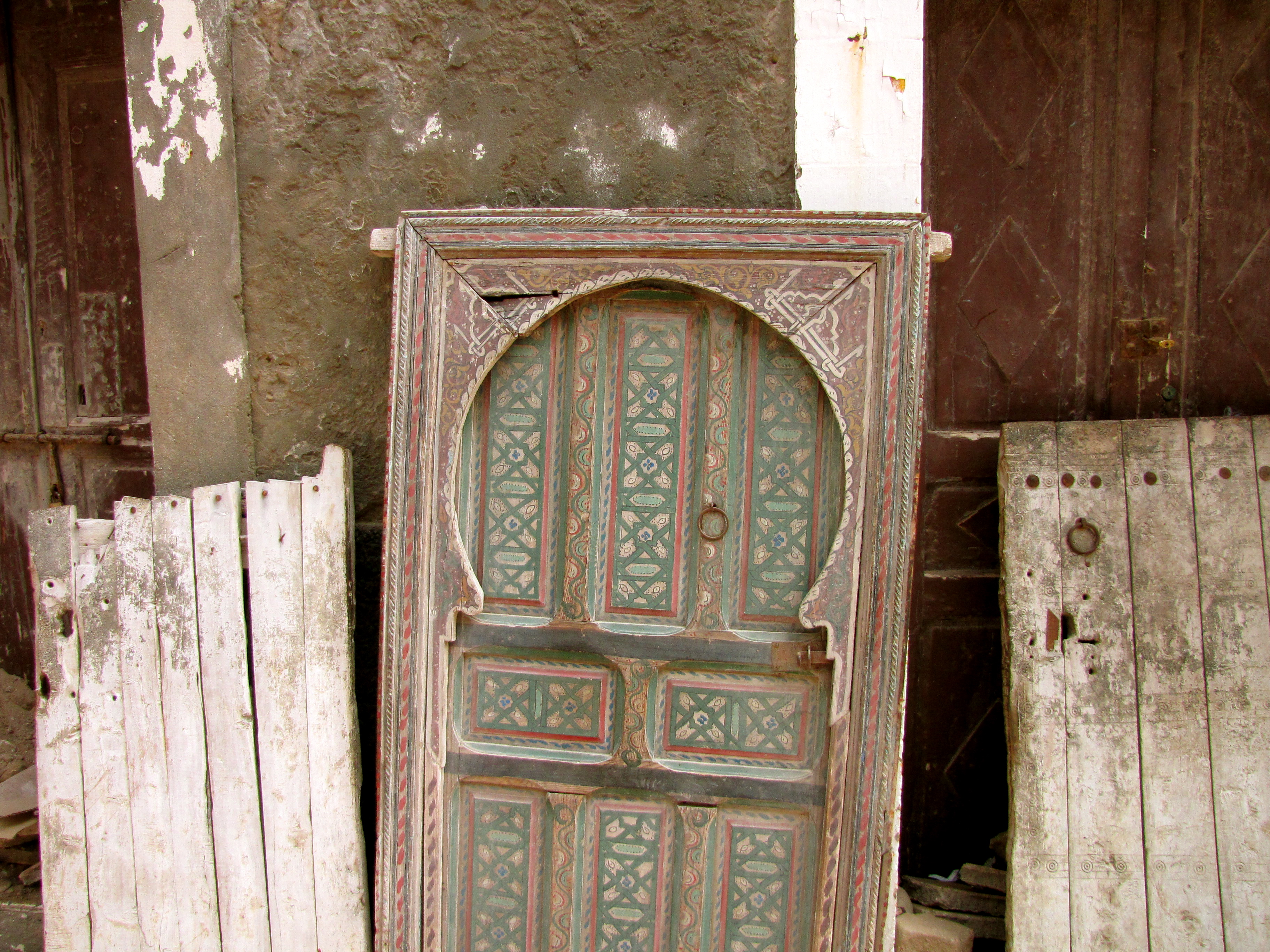
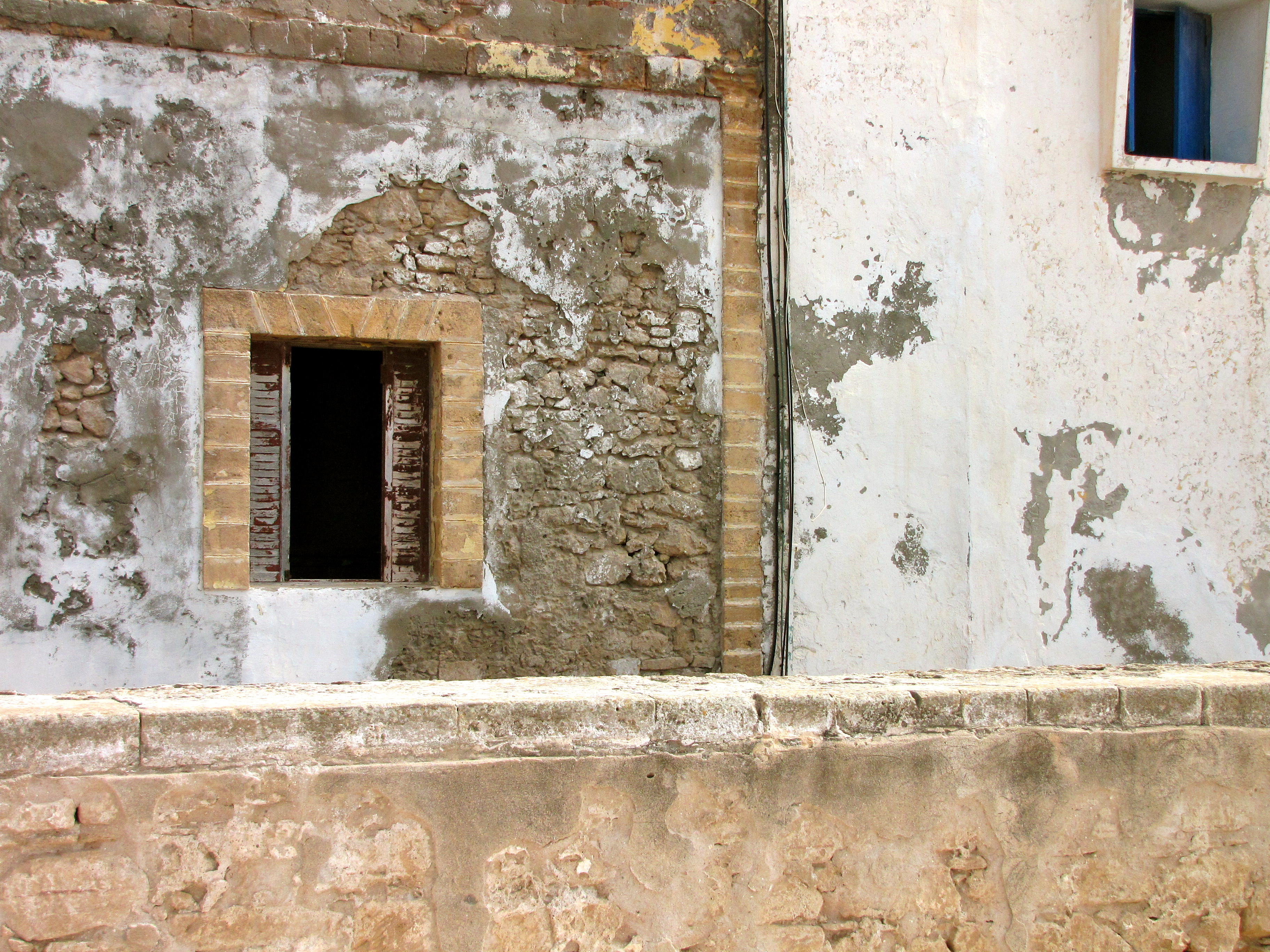
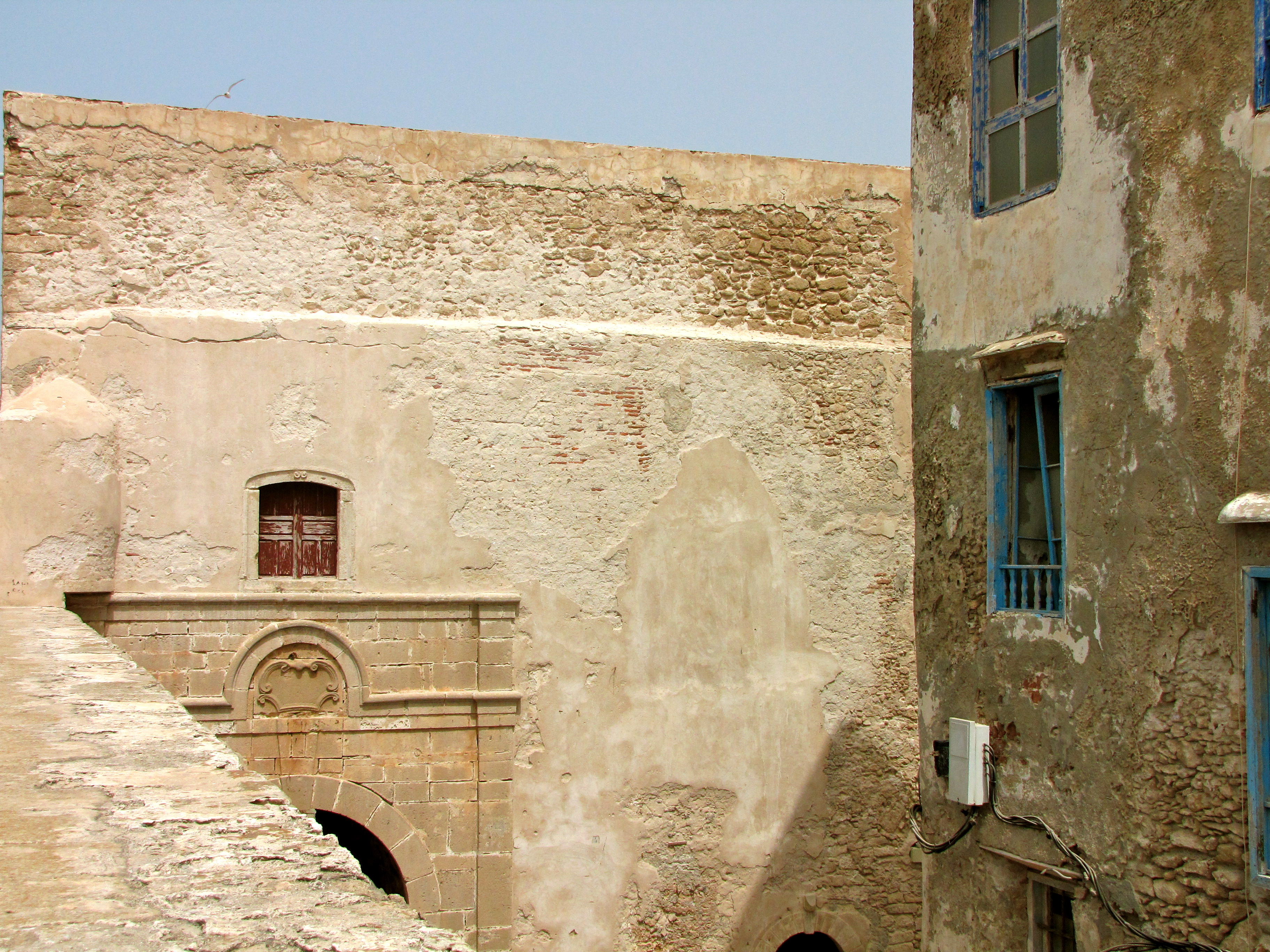
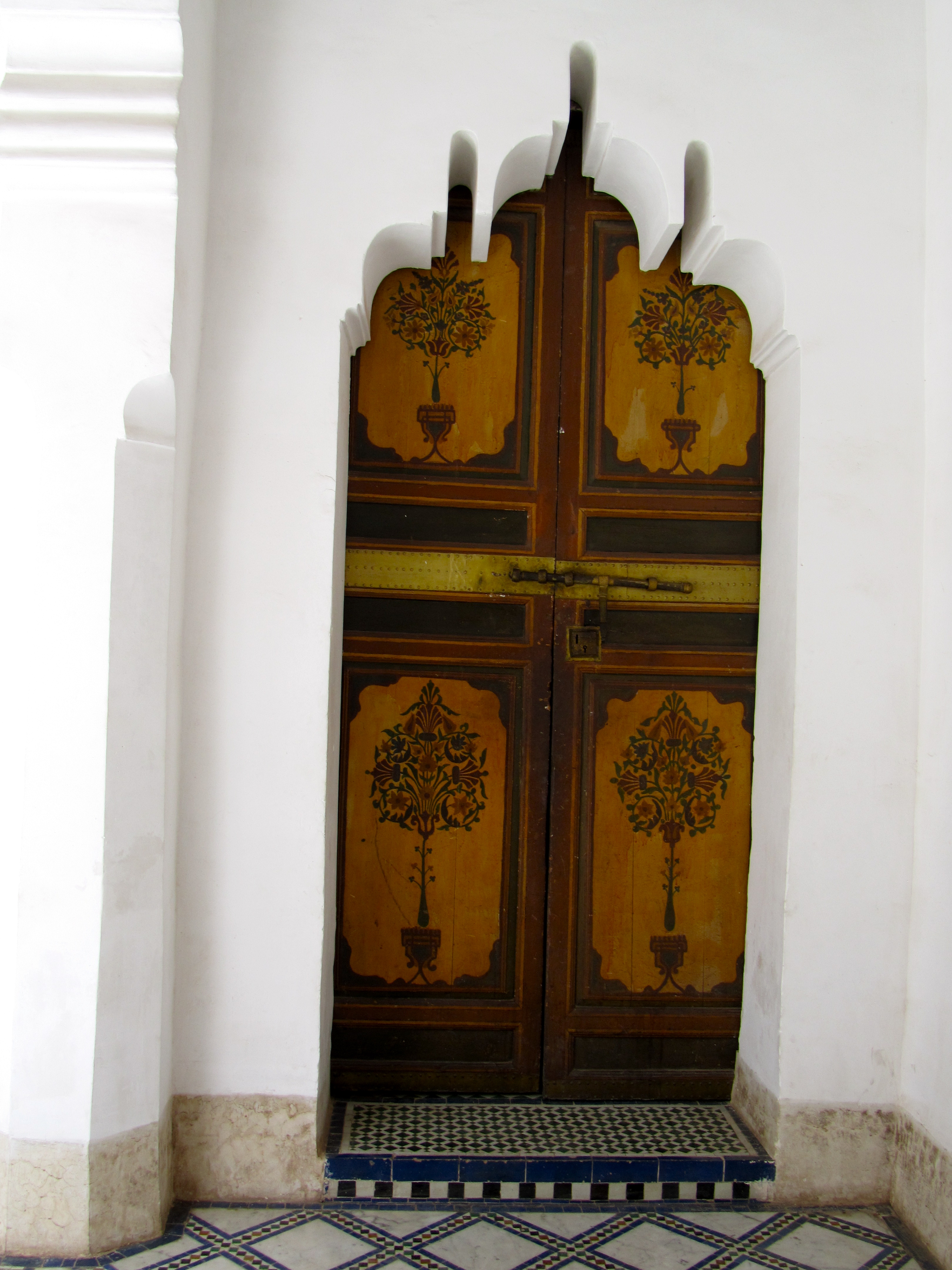
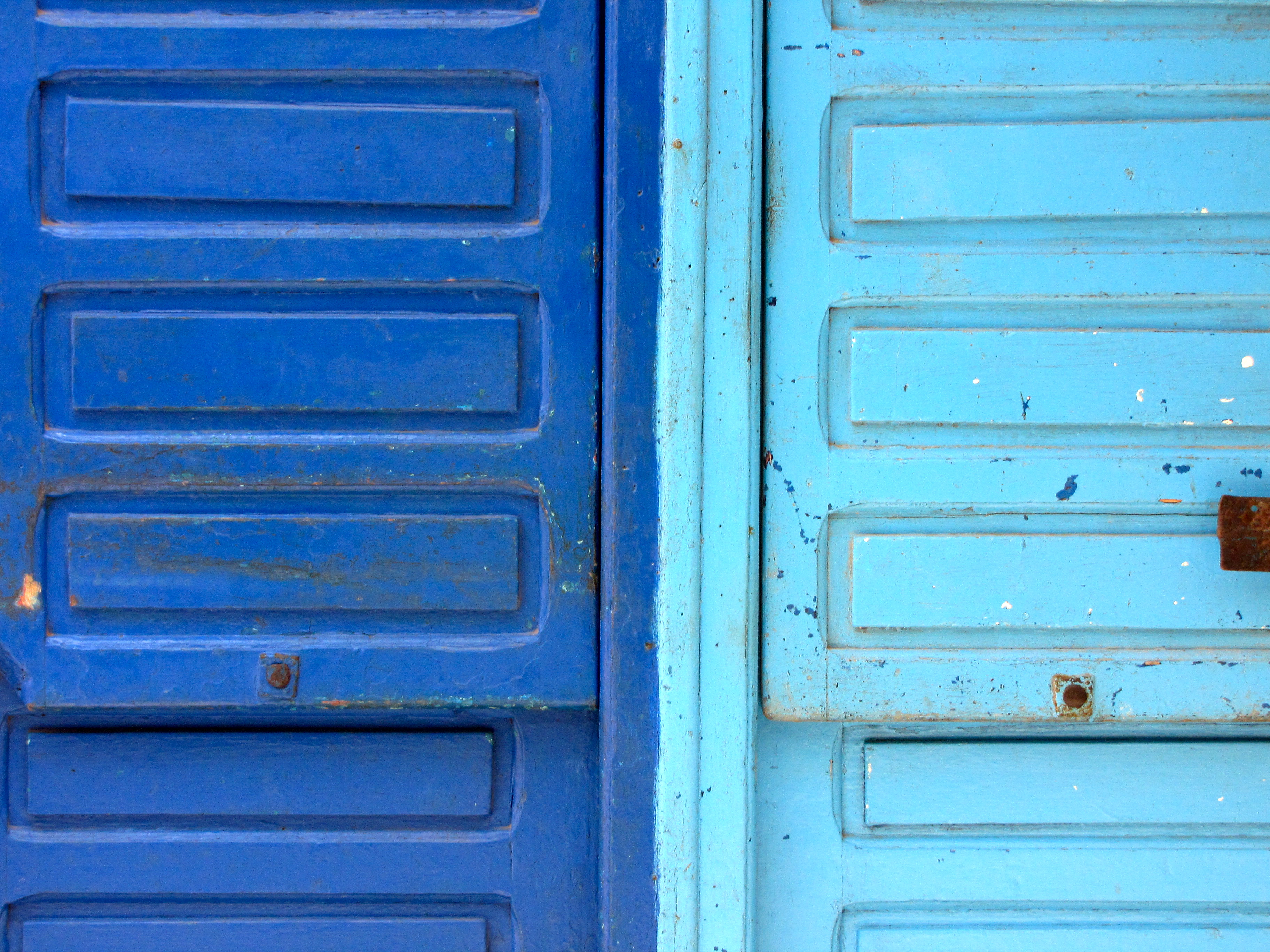
So there’s some more history of Essaouira. I find it interesting to know its history because it is definitely a place of interest and beauty – – but I didn’t know some of this stuff until returning home. It’s a great place to just walk around and visit the medina, the souqs, the beach, etcetera. As of 2001 it’s been on Unesco’s World Heritage list. It has a mellow atmosphere with narrow winding streets that are lined with little shops. There are so many wooden doors all over and beautiful buildings that it’s hard for the photographer in me to keep moving. As I’ve said before, if forced to stand still in one spot for 30 minutes or so, I’d be able to fill a complete disk on the camera with photos! It is absolutely the most beautiful seaside village I’ve been to so far – or at least until I visit the next one.

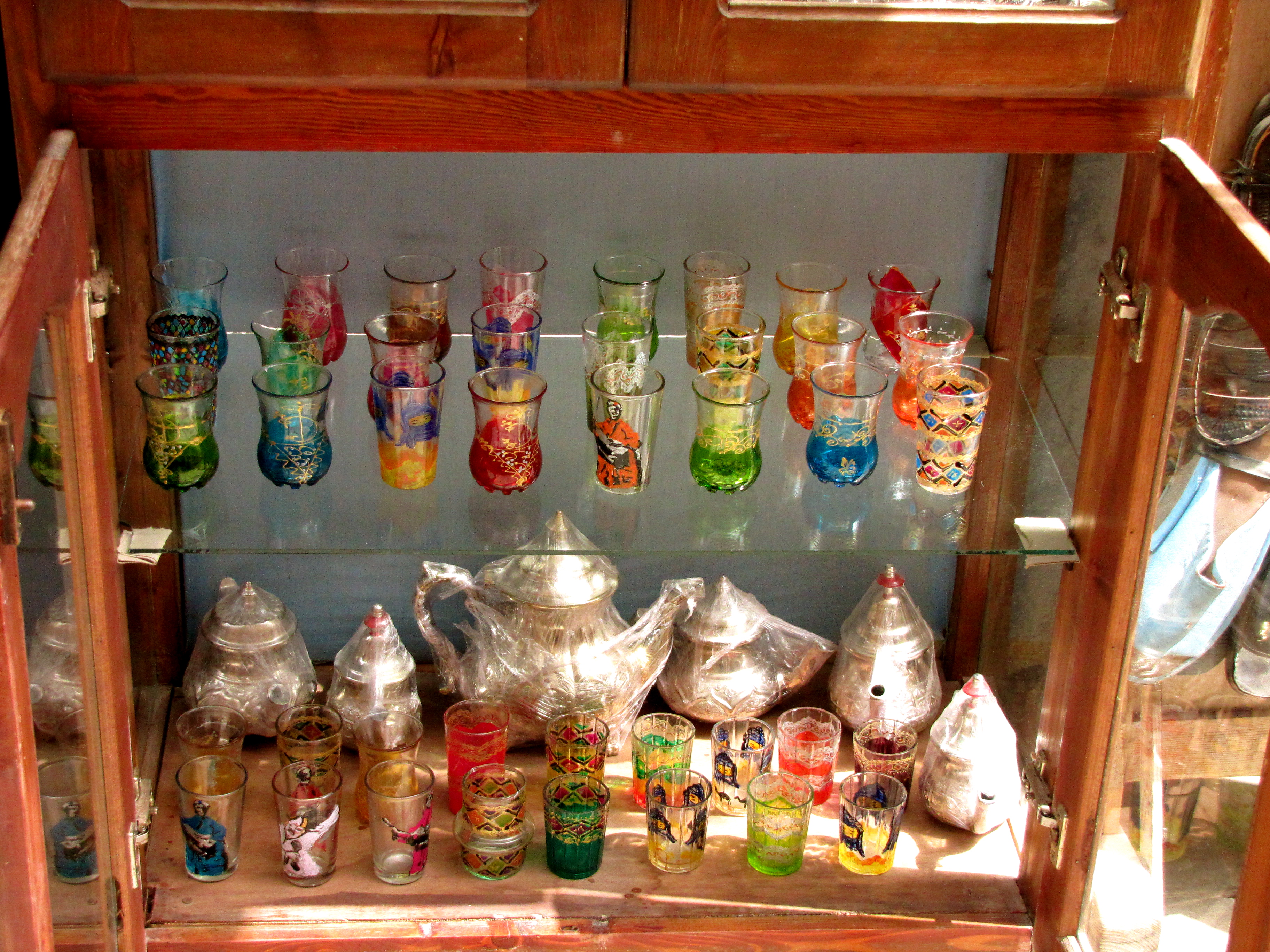
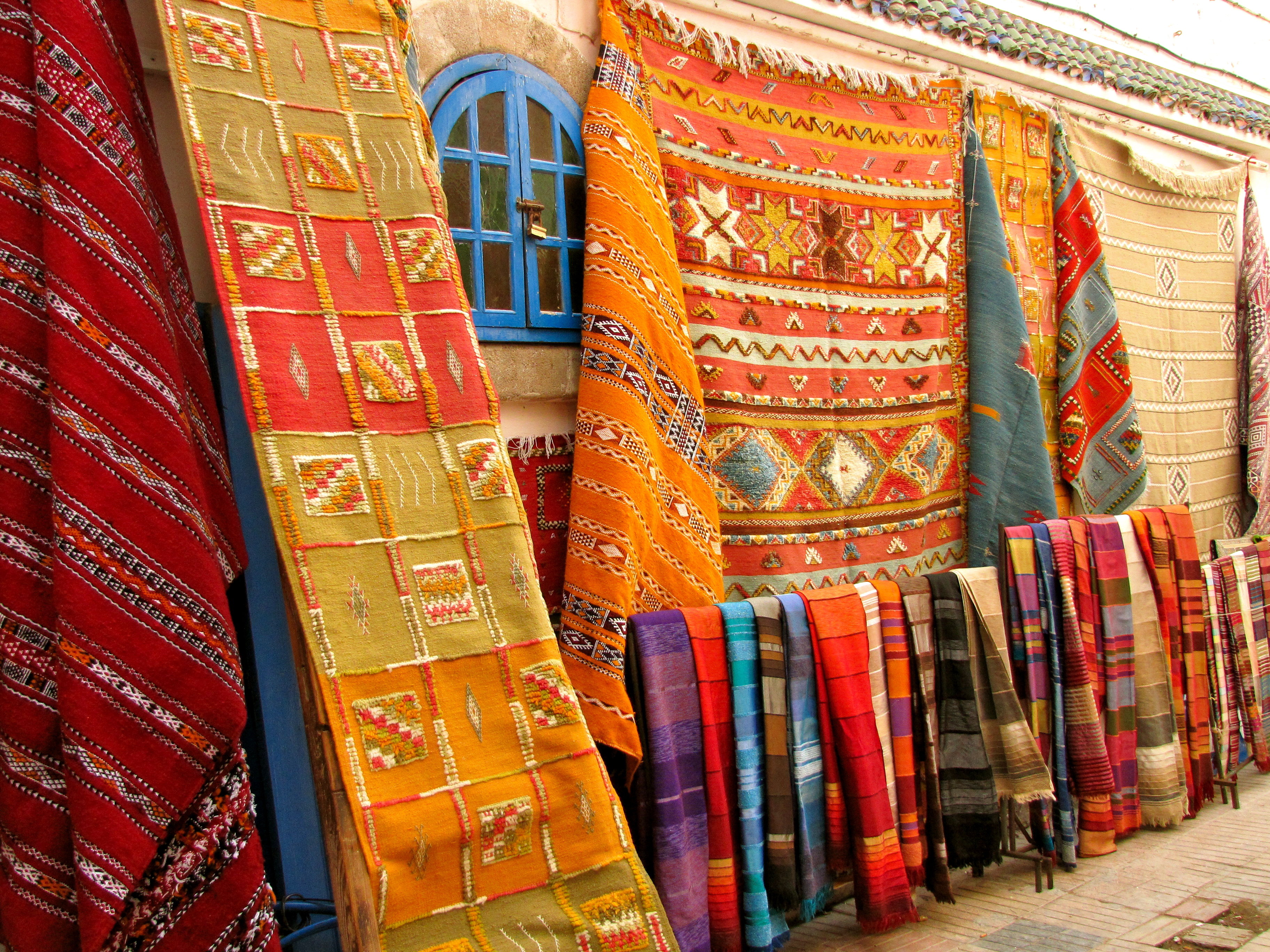
I knew a few things before arriving in Morocco: I was going to buy a Moroccan rug in the colors of red and blue, I was going to buy something wooden and brightly colored, I needed some little glass tea glasses in bright colors, and I was going to buy djellaba for me, my sister, and the kids. Check, check, check, and check! Having already taken care of the first two things on the list (and then some!) earlier on in the trip, I saved the glassware and the djellaba for Essaouira. Instead of a djellaba that customarily has a hood, I really actually bought Tourag caftans for all of: mine in light blue w brown embroidery and theirs’ in royal blue w bright gold embroidery. I could have bought all sorts of cool stuff on this trip but did a good job of saying no to most everything except the things on my list. And I know I’m going back so there’s always next time!

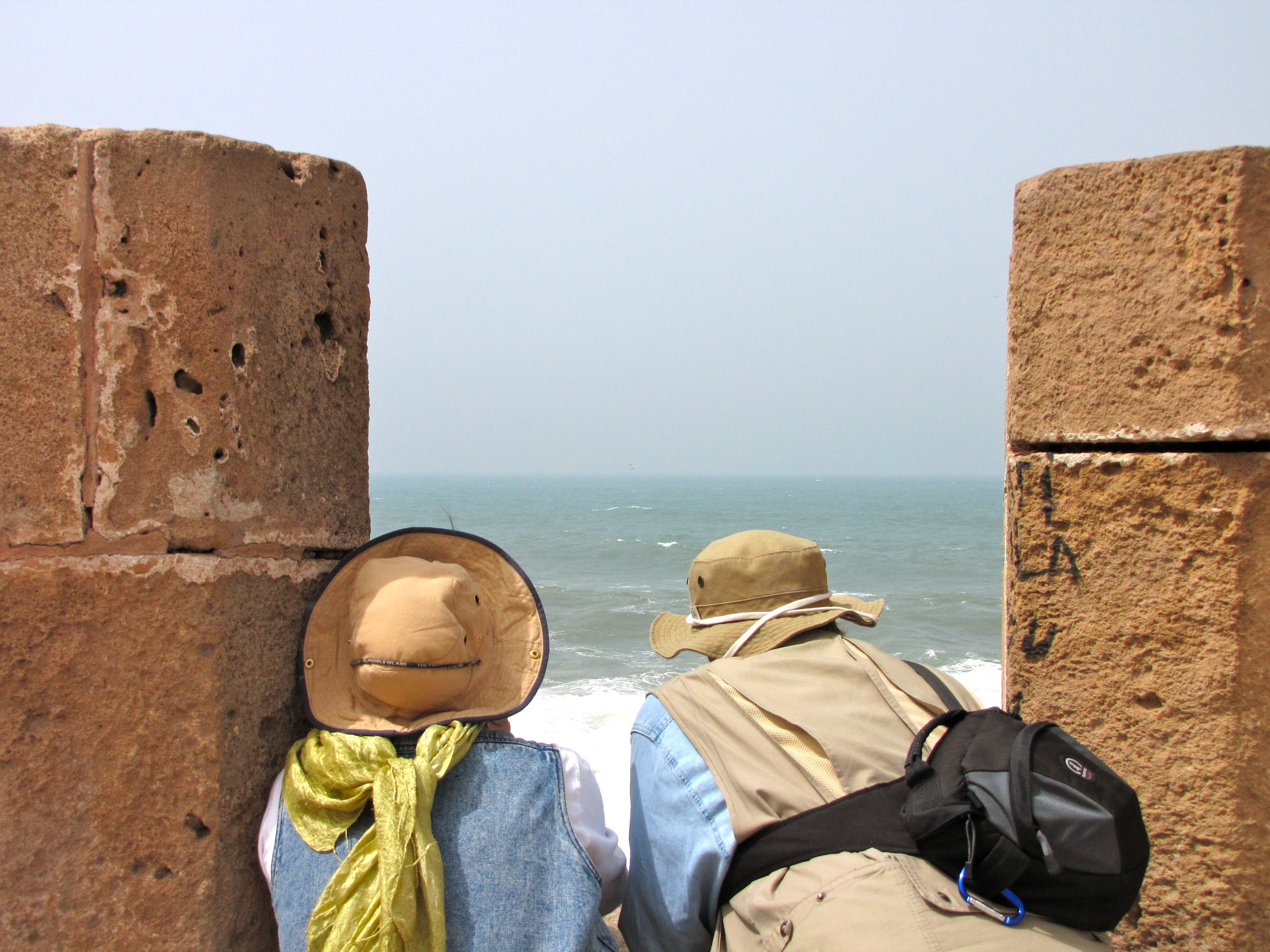
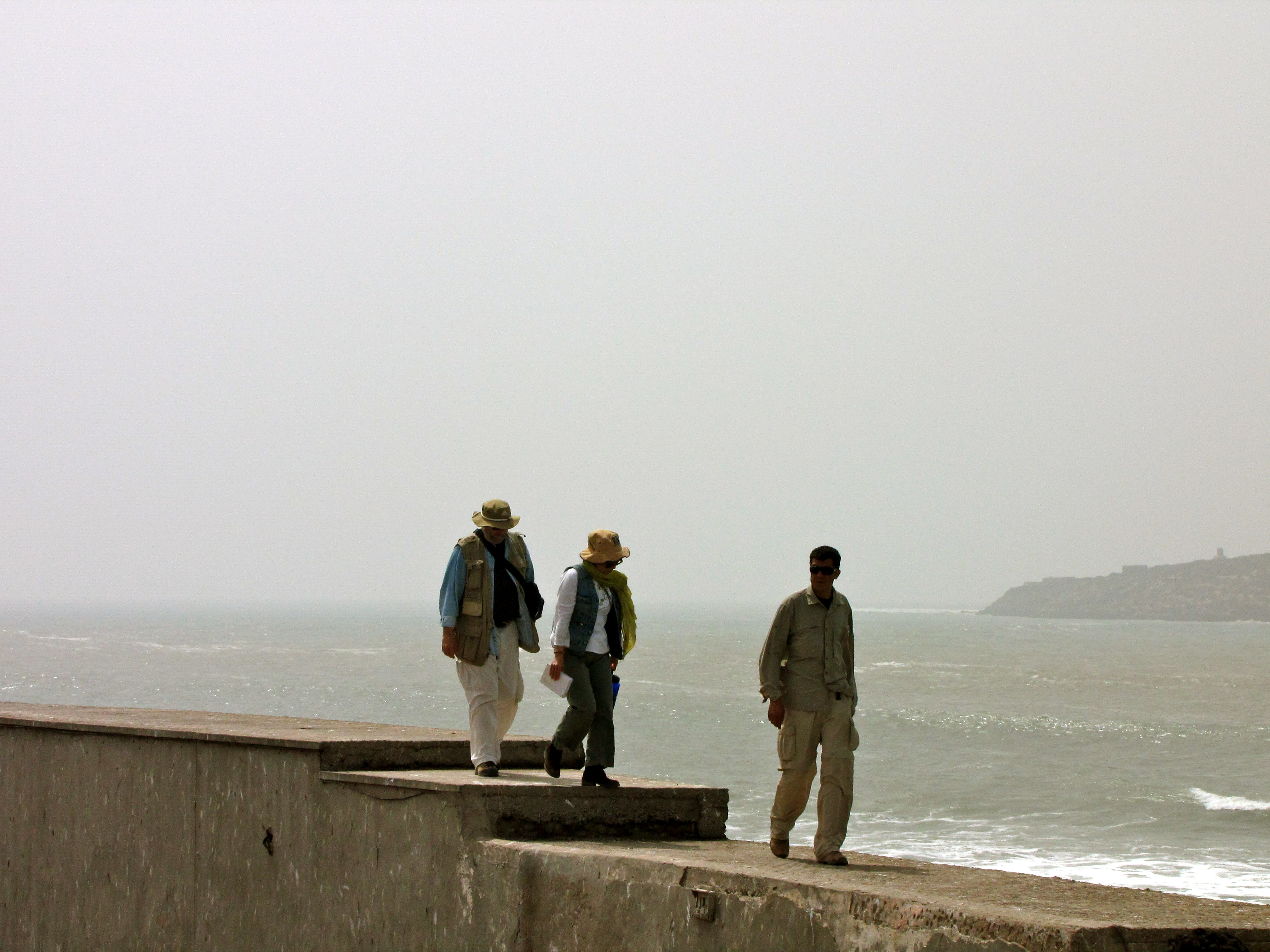
We walked around in the medina and looked out on the ocean. It was beautiful. The city is walled and we walked on top of the wall, along the sea, and I took a bunch of pictures. There are many shops inside the sea wall that have been there for decades. It’s really quite something. And the thing I liked about it, and have mentioned before, is that it’s a place for locals, not just tourists. In fact, it’s not very touristy, except for the shopping I suppose. But even that’s low-key and people rarely bother you while you’re looking at their stuff. In fact, I had to seek someone out to help me with a purchase! That would never happen in Marrakech, or anywhere else I’ve been in Morocco for that matter! I loved it. The djellaba purchase was the only one I bargained for and ended up getting them for much less. But the glasses were already such a great deal that it wasn’t even worth bargaining for less! It was a perfect price for me and was fair for the shop keeper as well! Deal deal. Good for you, good for me. We left the purchases there and continued walking around the souq. It was amazing! Having a beautiful sunny day doesn’t hurt, I’m sure. And being with people I adore isn’t bad either, but this little city is a jewel! I absolutely love it!

Share this:

  • Tweet
  • Click to email a link to a friend (Opens in new window) Email
  • Click to print (Opens in new window) Print
Like Loading...

The color purple

22 Sunday Apr 2012

Posted by seejanesblog in Morocco

≈ Leave a comment

From the Lonely Planet, I learned this:

‘The port that is today called Essaouira was hot property in ancient times because it had one thing everyone wanted: the color purple. Imperial purple couldn’t be fabricated and was the one color strictly reserved for Roman royalty. This helps explain the exorbitant asking price, which according to Aristotle was 10 to 20 times its weight in gold. The natural dye came from the spiky murex marine snails that clung to the remote Purpuraire (Purple) Islands.

Technically the Phoenicians were there first and discovered the stuff, but everyone wanted purple power. Savvy King Juba II established a coastal dye works in the 1st century BC to perform the tricky task of extracting murex dye from the vein of the mollusk, and kept his methods a closely guarded secret.The hue became wildly popular among royal celebrities of the day. Clepatra loved the purple so much that she dyed the sails of her royal barge purple to meet Mark Antony.

But violet soon turned to violent. Legend has it that Juba’s son Ptolemy was murdered by Emperor Caligula for having the audacity to sport a purple robe, making the trendy Ptolemy possibly the world’s first fashion victim. The bright, unfading dye was never successfully produced commercially and the secret extraction methods were assumed lost in the siege of Constantinople in 1453. But in Essaouira the stuff is mysteriously still available, for a price. The mysteries of the color purple still passed down from one generation of murex collectors to the next, and jealously guarded.’

Interesting. Next time I visit, I’ll go on a quest to learn more about this.

Share this:

  • Tweet
  • Click to email a link to a friend (Opens in new window) Email
  • Click to print (Opens in new window) Print
Like Loading...

Take notice of the beauty and life in culture!

17 Tuesday Apr 2012

Posted by seejanesblog in Stuff worth knowing

≈ 9 Comments

This has nothing directly to do with Morocco. I read this on the Washington Post Reader this morning and it touched me. Take a look at what I saw this morning…

Thousands of Hindus celebrate the spring festival of Holi by throwing tinted powder and perfume on each other — creating a breathtaking hypercolor frenzy. Filmmakers at the production company Variable decided to capture the event with a Phantom Flex, a high-speed camera that can record upwards of 10,000 frames per second. Suspending these moments in time, they want viewers to realize that “the fast paced lifestyles of our generation result in many not taking the necessary step back to soak in the existing world around us.” Their goal, they say, “is to help viewers further appreciate and take notice of the beauty in life and culture.”

Share this:

  • Tweet
  • Click to email a link to a friend (Opens in new window) Email
  • Click to print (Opens in new window) Print
Like Loading...

A day on the Atlantic coast: Essaouira, Morocco

16 Monday Apr 2012

Posted by seejanesblog in Morocco

≈ 2 Comments

Some of us knew we wanted to go to Essaouira, a UNESCO World Heritage listed city, on the Atlantic coast. (It is pronounced: Eh-swear-uh.) We waited until Sunday to go, the very last minute, in hopes that Marianne and Susan could join us. But they had other tasks they needed to complete: they were searching for tiles for their bathroom at home and needed to select it, buy it and haul it – – and we only had a couple of days left, so they passed. On Sunday morning Barbara, Richard, Mokhtar and I headed west to the seaside village Essaouira. It was fun to be on the road again and to head out of Marrakech.

Soon out of Marrakech I started feeling relaxed again! Marrakech is a fine enough place but is not my favorite. I found things to enjoy about it quite easily and I always had fun whilst there but I was definitely happier in the rural parts of Morocco. Today was no exception! I was thrilled to be 1. on the road again, 2. going to the sea, which I love, and 3. spending time alone with just the four of us. All day.

We passed through small towns along the way all aflutter with Sunday markets, to which the men attend but not the women. It was a fun drive. For us passengers, at least. Mokhtar might have another opinion since we got stopped by police along the way. Twice. The first time I noticed a guy in a truck give a signal of some sort as we passed him. His signal seemed angry yet he didn’t appear to be, so I put two and two together and figured out we were going to get stopped and I knew it would probably be for speeding. Shortly after that I heard Mokhtar groan as he spotted the police up ahead. And sure enough, they waved us over. When Mokhtar came back to the car he said it would have dinged him 4 points on his driving record but he ended up paying the cop some amount of money to expunge the fine – – something that happens all the time in Morocco, I’ve heard. The money never goes to the government but rather right in to the pocket of the officer. We continued on, sailing through the other patrolled spots until on our way back when we were pulled over for the backseat passengers not being buckled in (Barbara and me). We had no idea. Ugh. Again, Mokhtar paid his way out of that. How much he paid I have no idea. But I’m sure it wasn’t inexpensive.
We continued driving through villages. I tried to not take pictures so that I could really just enjoy the ride; be in the moment. But soon we approached goats in trees and all of that went out the window. I screamed about the goats! I had heard about this and really shouldn’t have been so surprised about it. I mean, after all, goats climb things. Why would they not climb a tree with low-hanging branches? But still, I was excited to see it. Mokhtar was unimpressed and nonchalant. “There’ll be more up ahead,” he casually commented. How can he be so sure, I wondered? Here’s how. While goats really do climb argan trees, you’d have to drive around to find them so these particular goats in trees, close to the road, with men selling stuff or holding a baby goat as a photo op with big smiles on their faces and collecting money from passersby were placed in these trees for tourists. Argh. Must I always be reminded that I’m a tourist!?! But at that moment all I could think about was how my nieces had told me that goats climb trees in Morocco and I knew all that mattered was that I get a photo of the whole situation. As soon as I got out of the car a man brought a baby goat to me and offered it for me to hold. A baby goat! Oh my gosh, who can’t resist any baby thing especially a little tiny goat?! So me, always leery about what kind of money I’m going to have to fork over for this kind of photo-op, turned to Mokhtar and asked, “Am I going to have to pay money to hold this little goat?” To which he responded, firmly and kind of annoyed I might add, “Hold the goat.” And then he handed the guy 10 dirham or something for the opportunity. So I got to hold an adorable little snuggly goat that seemed totally at home in my arms. Richard took my iPhone and tried to take a photo but he pressed the wrong button and shut the thing off so the guy who handed me the goat showed him the right button to push and I had my photo. (I love how iPhones are universal! Clearly this guy owned one, as did so many people I met). After a time I gathered myself together and gave back the baby goat and promptly sent a text with the photos to my sister so she could show the girls when they got up that morning.

We continued on toward the coast, stopping at the women’s cooperative where they demonstrated all things argan and talked about the cosmetics it is used in as well as the consumable products it is made in to. It was interesting, but because I’ve already discussed it in an earlier post (See March 31: The Argan Tree and Its Bounty) I won’t go on about it now. I enjoyed the stop very much and Barbara and I had fun shopping for products, both cosmetic and edible! And we all got free soap out of the deal! Plus, they had some gorgeous rugs on the floor as well as beautiful flowers all around the building.

Continuing on toward the coast we could finally see the sea spanning the horizon in front of us! It was beautiful, albeit hazy. And the air started to change. There was a welcome cool-off and a different, fresher smell in the air! Ah, the sea! I love water. And I was excited to see this rocky coast as well as the medina that prohibits cars (although allows motorbikes).

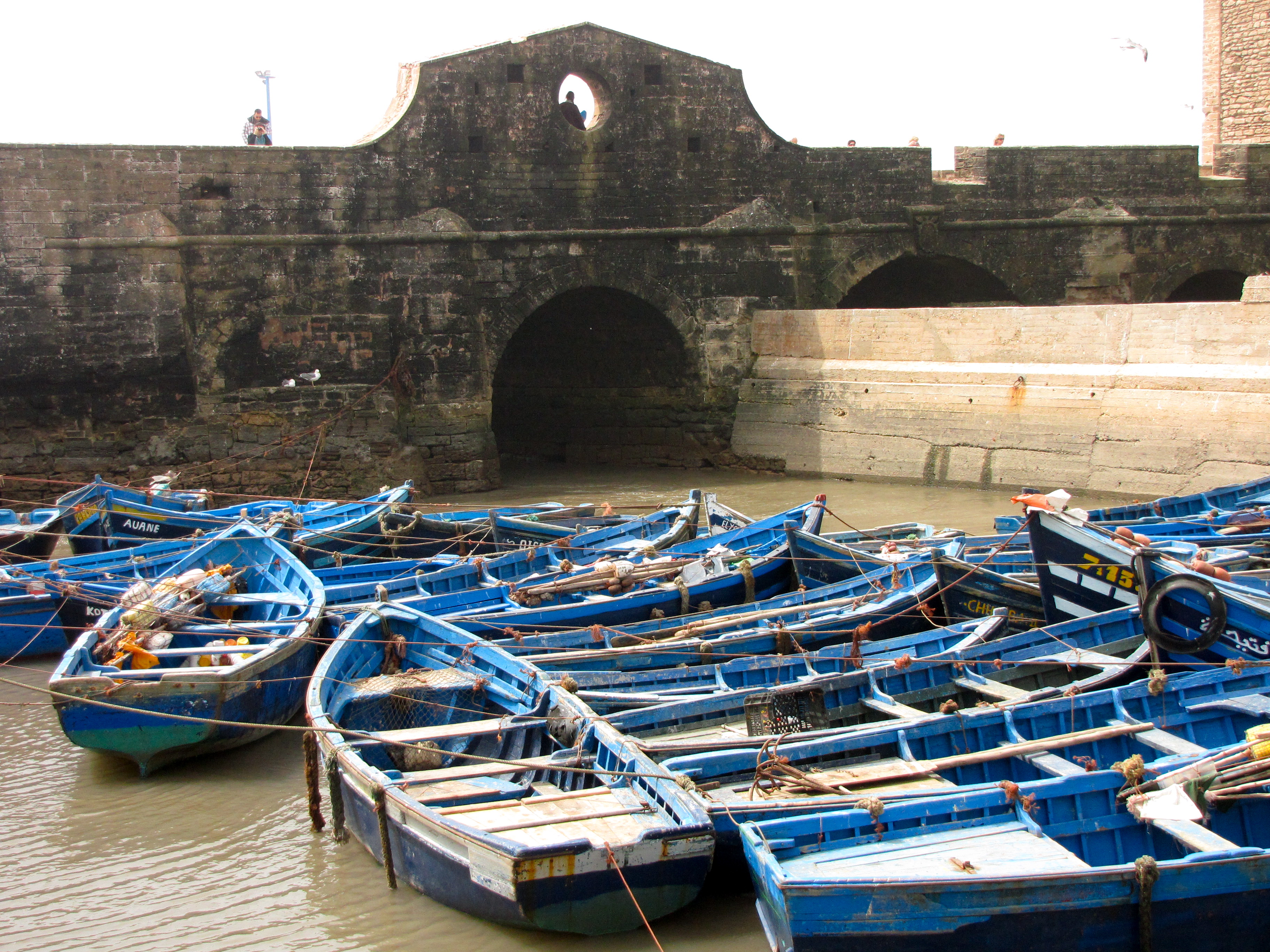
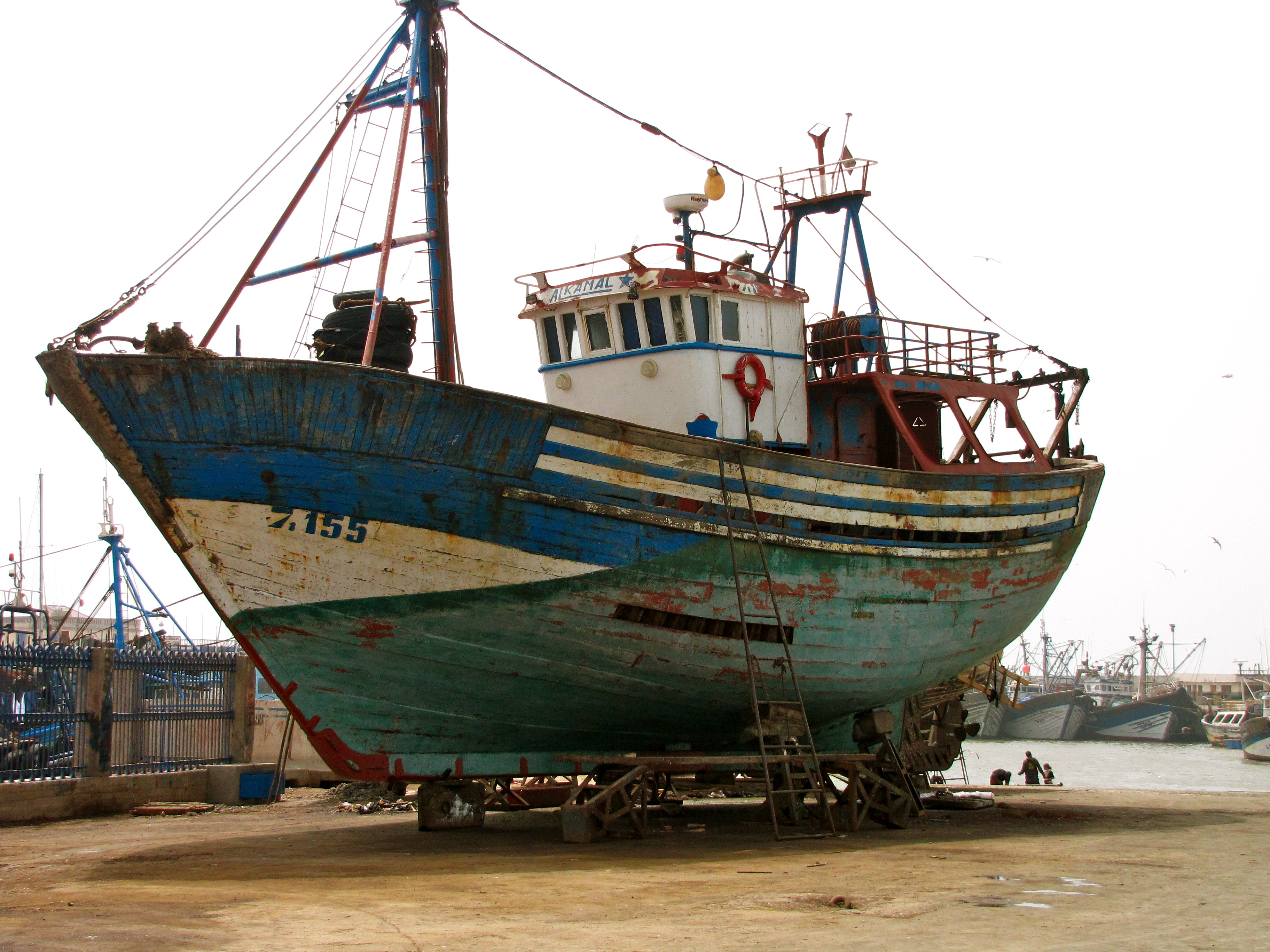
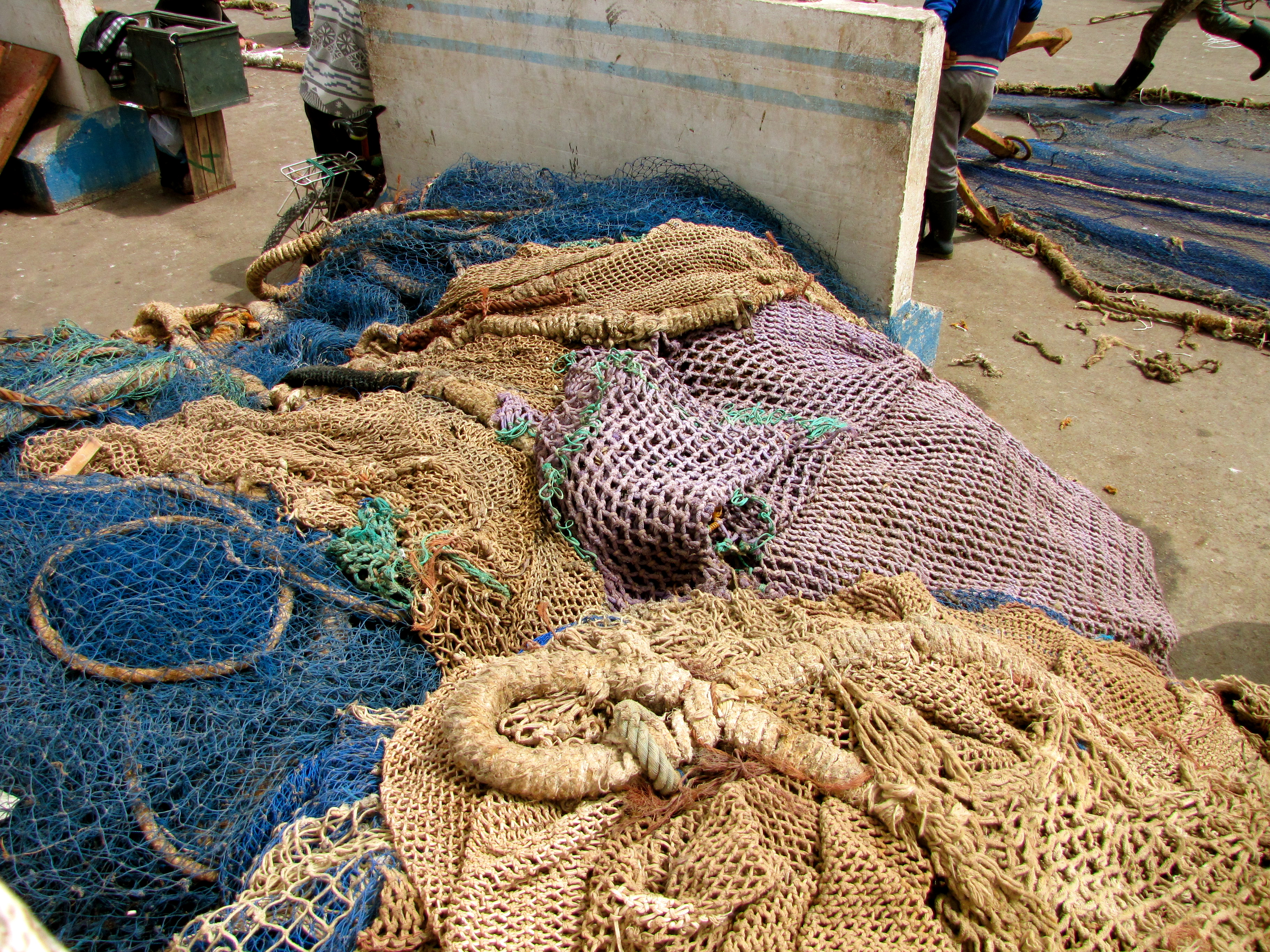
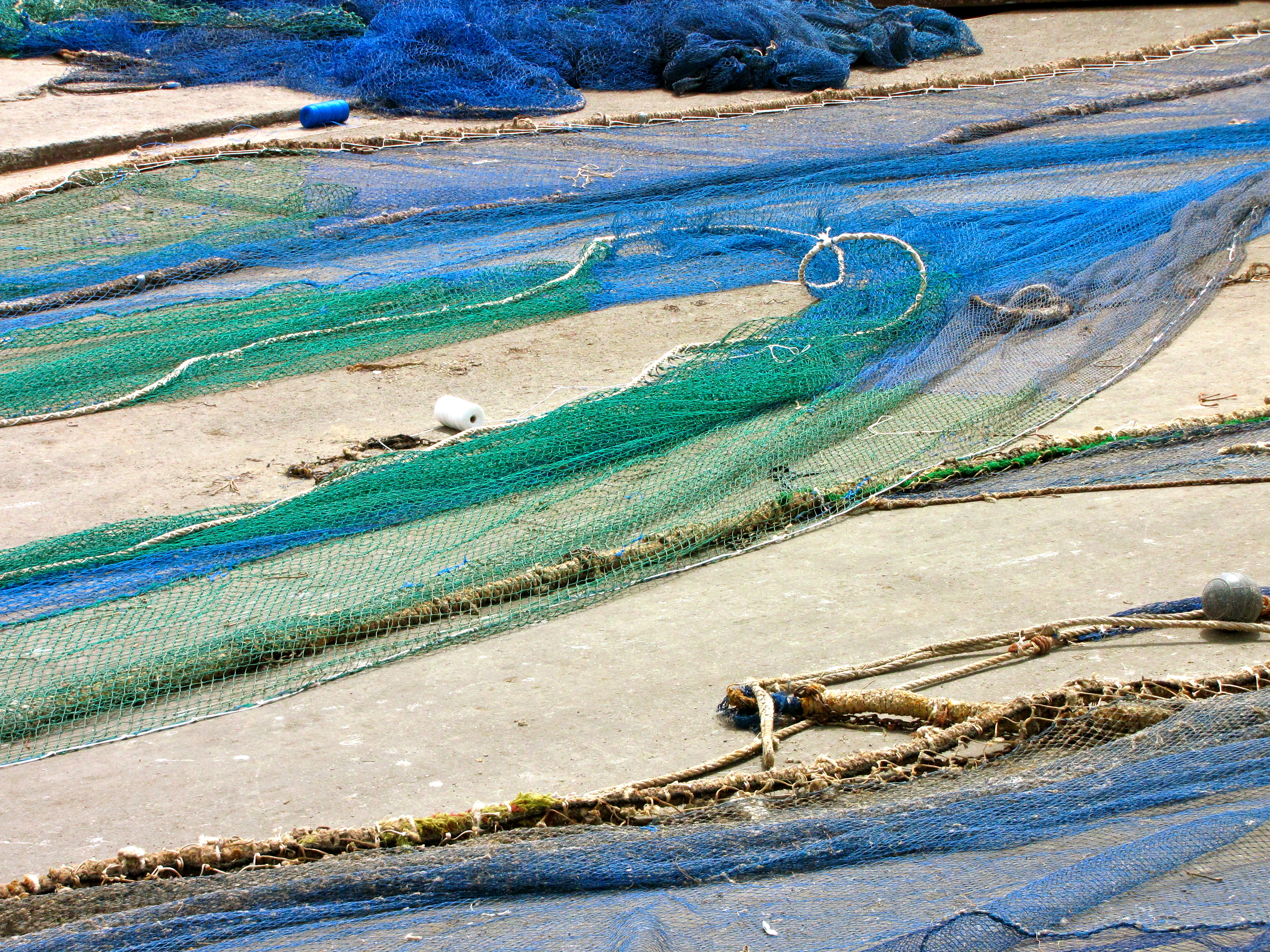
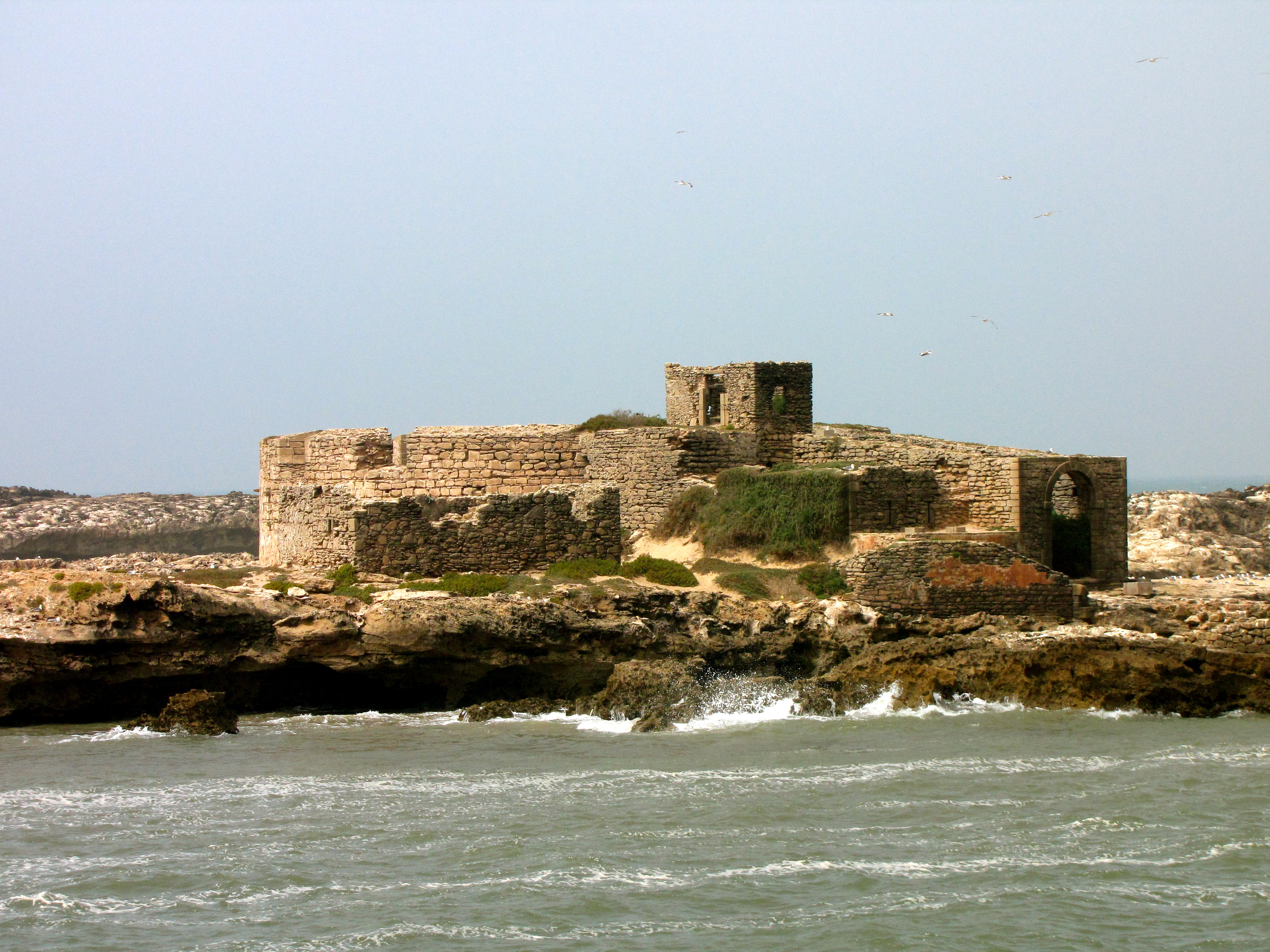
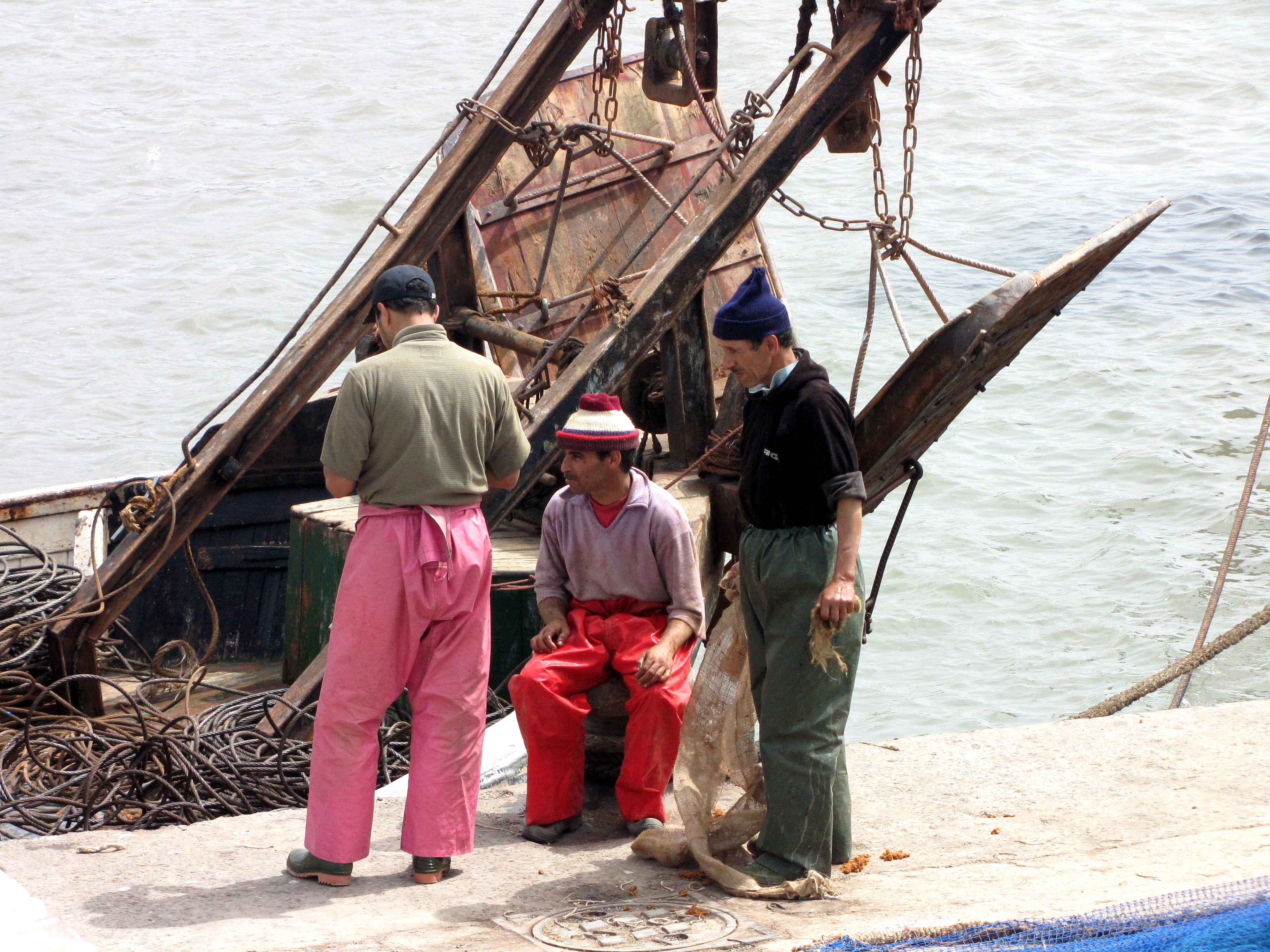
We parked and walked along the sea wall where I was mesmerized by all of the boats, nets, freshly caught fish, fishermen, and beautiful architecture! I think I could have stayed there for hours on end and filled an entire 8 MB camera disk just there alone! I love Essaouira and am so glad we visited! Since the 16th century the city has also been known by its Portuguese name of Mogador. The Berber name means ‘the wall’ in reference to the fortress walls that originally enclosed the city. Archaeological research shows that Essaouira has been occupied since prehistoric times. The bay at Essaouira is partially sheltered by the island of Mogador, making it a peaceful harbor protected against strong marine winds. Although we found it to be quite windy. Wikipedia says: ‘Around the end of the 1st century BCE or early 1st century CE, Juba II established a Tyrian purple factory, processing the murex and purpura shells found in the intertidal rocks at Essaouira and the Iles Purpuraires. This dye colored the purple stripe in Imperial Roman Senatorial togas.’ Interesting.

Wiki also says, ‘During the 16th century, various powers including Spain, England, the Netherlands and France tried in vain to conquer the locality. Essaouira remained a haven for the export of sugar, molasses and the anchoring of pirates.’ As for the foundation for the modern-day Essaouira, Wiki says, ‘The present city of Essaouira was only built during the 18th century. Mohammed III, wishing to reorient his kingdom towards the Atlantic for increased exchanges with European powers, chose Mogador as his key location. One of his objectives was to establish a harbour at the closest possible point from Marrakesh. The other was to cut off trade from Agadir in the south, which had been favouring political rival of Mohammed III, and the inhabitants of Agadir were forced to relocate to Essaouira. For 12 years, Mohammed III directed a French engineer, Théodore Cornut, and several other European architects and technicians, to build the fortress and city along modern lines. Originally called “Souira”, “The small fortress”, the name then became “Es-Saouira”, “The beautifully designed”.’

And more from Wiki: ‘From the time of its rebuilding by Muhammad III until the end of the nineteenth century, Essaouira served as Morocco’s principal port, offering the goods of the caravan trade to the world. The route brought goods from sub-Saharan Africa to Timbuktu, then through the desert and over the Atlas mountains to Marrakech. The road from Marrakech to Essaouira is a straight line, explaining the King’s choice of this port among the many that the Moroccan coast offers.’

So there’s some history of the place! But what I experienced was a city full of energy and beauty! The people were friendly, the souk and medina were easily navigated, even if a bit crowded, and it felt like a real working city where tourists visited but didn’t overtake the place. I saw a lot of locals out for the day and I like that. The less I feel like a tourist, the happier I am!

And we walked further to where they were selling the fresh catch! For some reason they didn’t allow me to photograph the fish, but I had already taken a few photos of them.

What beauty! And it didn’t hurt that it was only partially sunny, which allowed for some great lighting in general for photography. I will show a few more shots of the marina area and will end this blog post. I will continue with more verbiage and photos in another post. Fortunately or unfortunately, nearly every single shot I took of this place turned out beautifully! So I will attempt to not bore you with too many photos…if that’s even possible…

Share this:

  • Tweet
  • Click to email a link to a friend (Opens in new window) Email
  • Click to print (Opens in new window) Print
Like Loading...

Out and about in Marrakech

15 Sunday Apr 2012

Posted by seejanesblog in Morocco

≈ 4 Comments

Today I toured with Mokhtar around Marrakech. After coffee (nus nus), an omelette cooked in a tajine (yum!), and WiFi,

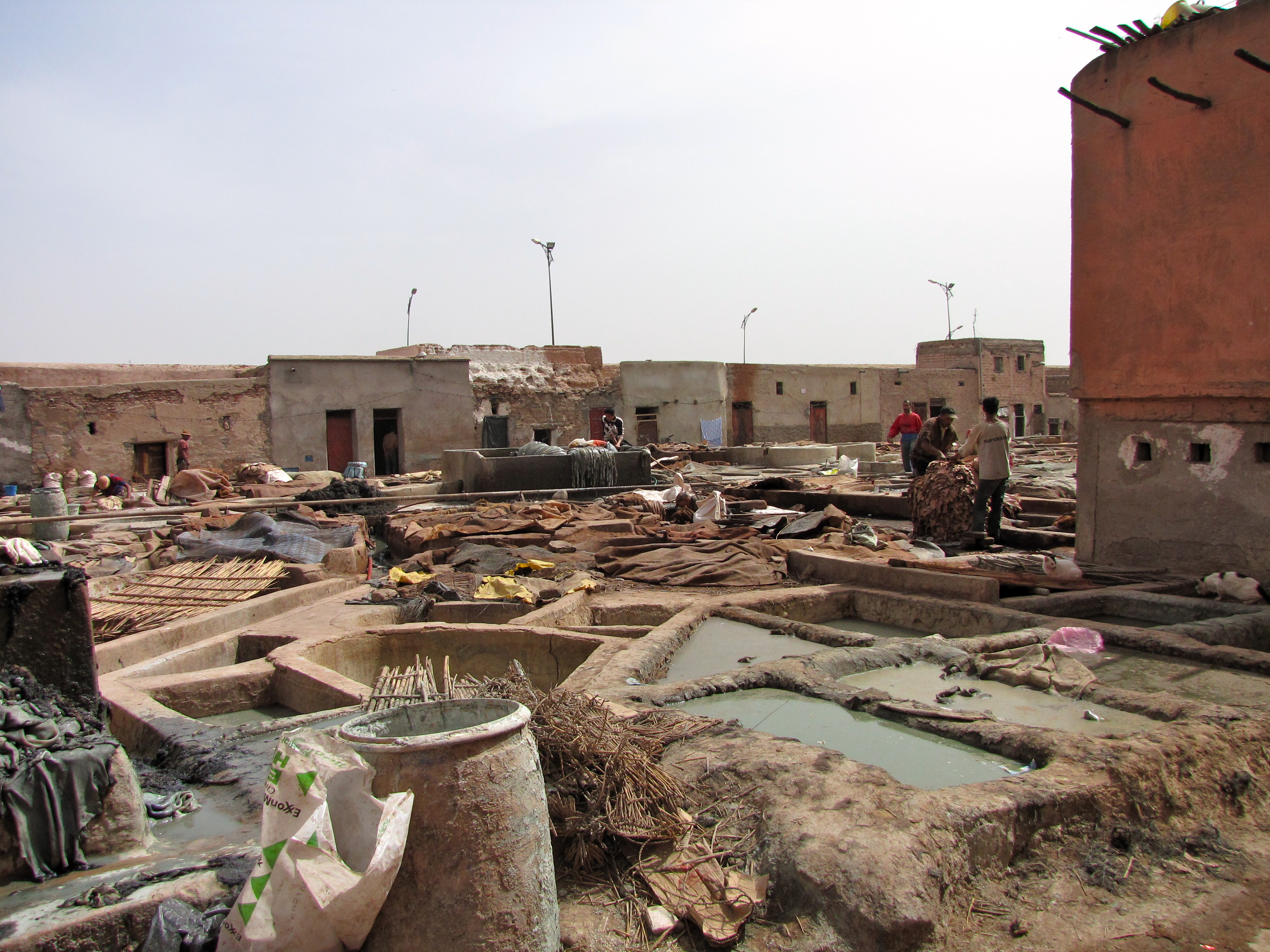
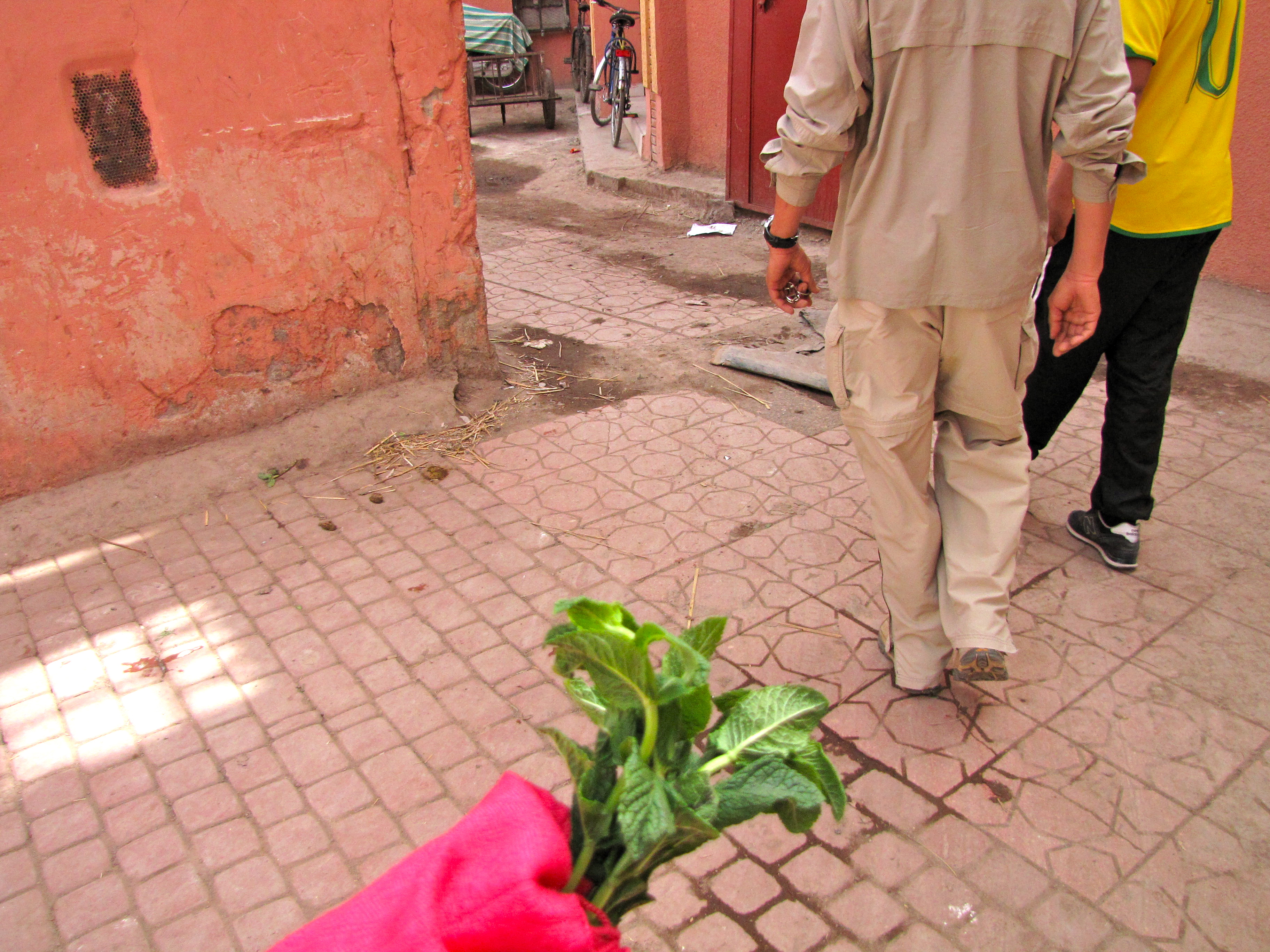
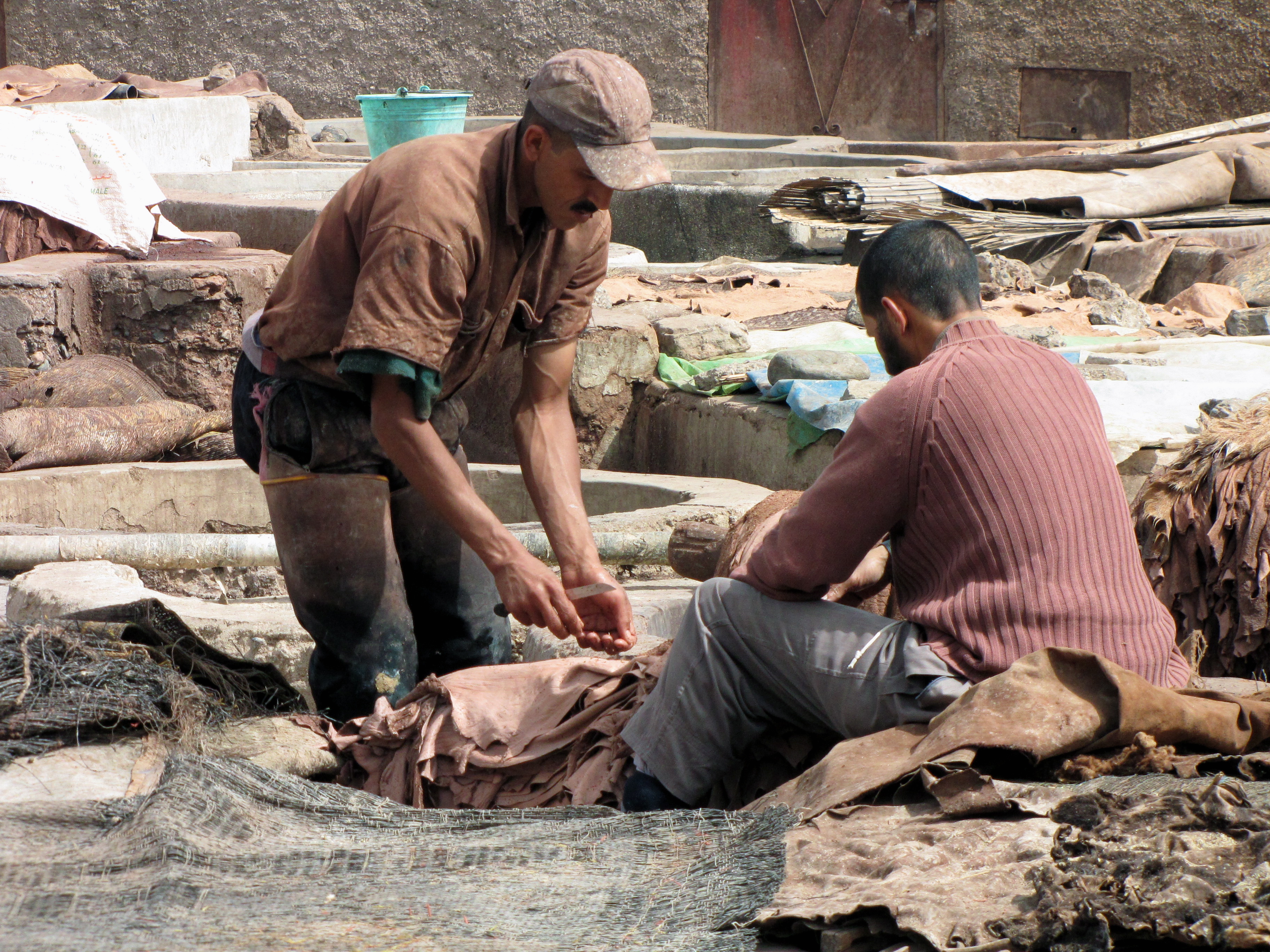
we headed to the tannery to see how animal hides are processed and turned in to leather. It was interesting and definitely not as smelly as it could’ve been had the weather been hotter and sweatier. Still, we bought the bunch of mint available at the entrance to hold in front of the nose to ward off the smell, just in case. The tannery is full of concrete vats with stacks and stacks of pelts in various steps of processing. There’s lime to burn the fur off the skin, there’s a vat of chemical and water with cinnamon to tint the skin (soon to be leather) brown, a vat of chemical and water with “saffron” (or colorant) to make the skin turn orange/yellow, and various other colorants for other colors. There are men standing thigh deep or waist deep in these vats, often filled with chemicals. And there are men cutting skins with knives – – because it appears that they’ve been pulled right off the body so they needed to be cut so they are flat pieces of skin. I didn’t get the level of detail of information I would have liked due to not understanding my guide so I ended up just taking pictures. Here’s a link from Wikipedia about tanning, in case you’re interested: http://en.wikipedia.org/wiki/Tanning. I very much enjoy stuff like this and would have liked more information, but I think this Wiki site tells a lot. At one point I asked the guide about these guys standing in chemical (not all of it is chemical but even the water can’t be hygienic!) and he looked at my puzzled. “Everyone needs to work,” he replied. So work is the most important thing, even over potential health issues. It was well worth the visit.

After the tannery I did the seemingly-mandatory perusal of the leather shop associated with the tannery. i didn’t want anything but looked to be fair to myself. The guy did his best to make me buy something and got a little annoyed when I asked Mokhtar to tell him I wasn’t interested (after I had asked a price of a particular silk piece I would have considered had his original price not been so high). Through Mokhtar I apologized to the guy for starting the conversation and told him I really wasn’t interested and didn’t want to offend him. We left unscathed after I extended my hand to him and he reluctantly shook it and we said goodbye. Clearly the goal is to sell me something.

It was hot out and we went right to the car to head to our next stop: Le Jardin de Marjorelle. What a beautiful place! Here’s what Wikipedia says: The Majorelle Garden (Arabic: حديقة ماجوريل‎) is a twelve-acre botanical garden and artist’s landscape garden in Marrakech, Morocco. It was designed by the expatriate French artist Jacques Majorelle in the 1920s and 1930s, during the colonial period when Morocco was a protectorate of France. The garden has been open to the public since 1947. Since 1980 the garden has been owned by Yves Saint-Laurent and Pierre Bergé. After Yves Saint Laurent died in 2008 his ashes were scattered in the Majorelle Garden.

I walked slowly through the gardens taking some gorgeous photos. It’s impossible not to take beautiful photos in this place!

From the garden Mokhtar dropped me at the palace with instructions that I was to meet him under the flag in the souk at the silversmith shop he recommends I use to buy some silver. I meandered through the grounds of the palace enjoying the sunshine, the flowering trees, and the smell of jasmine wafting everywhere! It was mesmerizing! Here are some photos, before I go on…

Continuing to walk into the courtyard of the palace, I saw Marianne, Susan, Richard and Barbara! I was genuinely so happy to see them because we had been separated by differing activities for far too long! It was so much fun to run in to them. We sat on the bench and talked for quite a long time and I hated for them to leave. Meantime, Mokhtar called and wondered where I was; he had been waiting for a long time for me and I’m sure was wondering what was going on. So therefore, I rushed through the palace rather quickly. But what a gorgeous place! I had enough time to take some great photos, but not to learn anything about the place, which I suppose is fine since I was all about taking pictures.

Marianne and Susan halfway intended to meet Mokhtar at the silver shop so I directed them to it and told them I’d be home within two hours so I could let them in since they didn’t have a key. I walked down the street admiring the beauty all around me and spotted them way down at the end of the street. They turned down a narrow street before I could get to them so we shopped without them, sadly. The silver shop was small but filled with great stuff! I bought a beautiful ring and a bracelet. They gave me a charm of the hand of Fatima as a gift. It was a fun stop and I’m happy with my purchases, even now that I’m home!

Since we decided we were going to make omelets for breakfast for everyone the next morning, Mokhtar went and ordered the seasoned meat we planned on using. It’s not an easy thing to find or buy so he had someone get it ready for him to pick up later. After shopping for silver we walked around in the souk a bit and then went back to the riad so that I could let Marianne and Susan in and so we could attend the second cooking class: chicken and vegetables with preserved lemons and Moroccan salad. I found the cooking classes frustrating because we didn’t get to do our own chopping, talking or cooking! Our “teacher” was a pregnant girl who didn’t feel well and had a bad attitude in general. She rushed through the whole process at lightening-speed and bolted out of there before we knew what hit us. Asking questions did no good because she didn’t speak English. The head of the cooking school told us that every family has their own way of doing things and that she did things differently. Well, I no more know how to make chicken and preserved lemon than I do a figgy pudding. It’s frustrating because I paid to learn these things and suffered through some really annoying hours to get to this point. But I digress. I don’t want to focus on the only negative part of the trip. So I’m done discussing the cooking “school” experience on this blog.

Here’s what. As a group, we always had fun together! We laughed a lot and generally enjoyed each other’s company. At least I speak for myself on this. I grew very fond of these people I traveled with during these two weeks and I loved being with them! But I also liked being on my own exploring Marrakech in the way that suited me.

Share this:

  • Tweet
  • Click to email a link to a friend (Opens in new window) Email
  • Click to print (Opens in new window) Print
Like Loading...

Marrakech and the Ourika Valley

15 Sunday Apr 2012

Posted by seejanesblog in Morocco

≈ 3 Comments

It was Friday, 23 March, 2012. My first full day in Marrakech and the surrounding area. Some of the other members of the group were walking around the medina and the souq; others were visiting museums and landmarks in the city. But first things first. Barbara and I had a hankering to do some computering and we needed WiFi fast! Richard and Mokhtar were visiting a hammam (a.k.a. bath at a bathhouse) in the morning so they dropped Barbara and I off at Grand Cafe de la Poste. What a great place! The music was amazing and the atmosphere comfortable, if not a bit hoity toity. Still, it was exactly what we craved and we were both able to blog, check Facebook and email, and drink fresh squeezed jus d’orange and mint tea! We actually probably talked more than we blogged or wrote, but we needed that, too! We were able to make a few plans for the coming days and share our thoughts about the trip thus far. It was really fun and a great bonding experience because it really was the first time we had to spend completely alone! Sooner than we expected, the guys showed up and Richard told us all about their hammam experience. It was funny to hear him describe it. “We stripped down to our underwear and carried our own water in buckets into a room with marble slabs. And suddenly they threw water on us and used something like, I don’t know, rusty nails or something to scour our bodies…” It was hilarious! Only when I had my hammam experience a couple of days later did I understand how true his story was!

We finished up and dropped Richard and Barbara off at the riad. We probably went in for a while but I don’t remember those details. What I do remember is that after a few minutes’ discussion, Mokhtar and I decided to get out of Marrakech and headed to the Ourika Valley. I had no idea what I was in for! It is beautiful! I loved it and ended up going back again on Monday with Marianne and Susan, and Richard and Barbara. There was so much to see and so much to photograph. Unfortunately the weather was rainy so I had to make the most of photography through raindrops. Still, I was able to get some good shots. We went back to the riad later and I picked up some fresh clothing and we went over to Mokhtar’s apartment to make tajine since everyone was out and about that night. I learned how to make tajine in a regular kettle, not in a tajine, and was a little disappointed that it was really good, even without the ubiquitous conical-shaped pottery slow cooker! I was given the responsibility of shelling fava beans and snap peas: two whole bags! I think more landed on the floor than in the pan! But after waiting the requisite 2 hours of cooking, the meal was delicious! A beautiful day and a great evening!

Share this:

  • Tweet
  • Click to email a link to a friend (Opens in new window) Email
  • Click to print (Opens in new window) Print
Like Loading...

Joie de vivre

15 Sunday Apr 2012

Posted by seejanesblog in Morocco

≈ 2 Comments

The joy of living: joie de vivre. I have it; I know that. I feel it strongly often, but especially when I travel. In my life I often feel different from those around me. Not in a bad way. But I’m a democrat in a sea of republicans, single amongst doubles, no children around those with children, a traveler amongst non-travelers, etc. But when I travel I feel a part of everything and everyone. I feel like I blend in with those around me – – even though I probably really don’t! I always look different from those I’m traveling among and I’m carrying a camera, for goodness’ sake, so how can I really blend in? But the point is, I feel like I blend in to my surroundings when I travel. Traveling makes me more joyful!

My favorite day happened to be the last day we were all in the van together. It’s not like I didn’t enjoy other days prior. And I most certainly enjoyed the days after this day, but there was something about this place in the valley that I particularly found beautiful. I have already written a bit about it but now I write more – – and add pictures. The weather was beautiful. The sun was shining and the sky was blue. And I knew it was the last day in the country before going to Marrakech. This time with the group, as I knew it, would end.

We drove through such beautiful scenery and stopped for coffee in a beautiful setting. We also stopped again at what was my favorite place for tajine. Everyone else was tired of tajine so I joined Ahmed and Mokhtar for some and was able to eat up with all the rest of the men, including many guides that Mokhtar knew. “He’s from my village,” Mokhtar always told me. I know he’s from M’Hamid, a small village of about 3,000 people. We ran in to about 6 people from his village in Marrakech and the surrounding area, a pretty high ratio, I’d say.

Everything changed as we approached Marrakech. No more countryside and villages. Now lots of people, activity and commotion. We arrived at our riad and settled in. I stayed with Catharine in a twin room. All of us were on the second floor except Carolyn who stayed down near the kitchen on the first floor. I spent the first evening with Mokhtar at his apartment where he made spaghetti for dinner and we used his WiFi to catch up on computer stuff. It was fun to see a different part of Marrakech and to experience a bit of normal life. I slept like a baby in our riad that night and was happy to be settled in to one place for the next many days for the first time on the trip!

Share this:

  • Tweet
  • Click to email a link to a friend (Opens in new window) Email
  • Click to print (Opens in new window) Print
Like Loading...

The little Berber village – – and the music!

15 Sunday Apr 2012

Posted by seejanesblog in Uncategorized

≈ 2 Comments

The music in a particular Berber village we visited was phenomenal. One of the guys who entertained us one evening at the auberge we stayed at (where the guy from the UK ended up dying…) plays the lotar. He is a silversmith by day and a lotar player by night! A lotar, is a Moroccan guitar, made of a “leg of a bed” or any turned wood, a bowl covered with henna-painted goat skin for the body and 4-6 strings; it is approximately 36″x 10.5″x 8″ and there are generally colorful paintings all over it. And it sounds so great in the right hands.

Share this:

  • Tweet
  • Click to email a link to a friend (Opens in new window) Email
  • Click to print (Opens in new window) Print
Like Loading...

Music!

15 Sunday Apr 2012

Posted by seejanesblog in Observations

≈ Leave a comment

The music on this trip was remarkable! Thanks to Richard and his flute, Mokhtar and his drumming, and Achmed and his castanets as well as the musicians we met along the way. In the smallest of villages in Morocco we found musicians and heard the most beautiful music! The waiters in restaurants and hotels along the way double as musicians and in the little Berber village we stayed in, the silversmith by day was a lotar player by night! And the talent! Amazing. Whilst walking at night in the desert I heard bongo drumming floating through the air. Add that sound to the starry Moroccan sky and to the sound of my feet trudging through the sand and it was magical! In Essaouira, on the Atlantic Coast, I was introduced to Ari Farka Toure and Toumani Diabate playing on a CD in the souq. I fell in love with it instantly! Turns out, we were following Richard and Mokhtar to that very store to buy that very CD. “They were going in to buy that CD and you just happened to like it when it was playing over the loudspeaker,” Barbara informed me. I am crazy about this music and am almost haunted by the memories from that day whilst listening to it! I encourage everyone to listen to the album, “In the Heart of the Moon”, which won a Grammy in 2005. Amazing music by these Malian artists. It’s the music I listened to the last half of my trip to Morocco and it’s the CD Mokhtar gave me to remember Morocco by…

And of course, three other songs: Barbara singing the Chinese love song, Mokhtar singing an Arabic prayer, and Marianne and Susan singing a farewell song to our driver, Achmed, on his last day. The latter song made me burst out in tears because of its simplistic beauty. Had I not been so taken off guard, I would have videoed it with my iPhone, like I did inthe excerpts below…

So beautiful…

Share this:

  • Tweet
  • Click to email a link to a friend (Opens in new window) Email
  • Click to print (Opens in new window) Print
Like Loading...

My friends, Richard and Barbara Robinson

15 Sunday Apr 2012

Posted by seejanesblog in Observations

≈ Leave a comment

Tags

lonely planet guidebook

Richard Robinson is my travel agent’s husband. Barbara Ye Robinson (of Amcan Travel) and Richard Robinson are an enviable couple. They take care of one another, they are nurturing toward one another, and they occasionally bicker – – which is refreshing. Richard is the travel agent’s husband; the tour guide’s companion. He doesn’t get involved in the details of the trip and all the planning that goes along with that. He was as “in the loop” about the goings-on of the trip as I was. In other words, not at all. Wrongly on many occasions, I assumed he knew what we were doing next. He didn’t. He’s blindly along for the ride. And he’s the photographer and musician (plays the flute and drums and whatnot). Barbara is used to being in charge since she plans and organizes everything regarding the trip. She’s small in stature but not in personality. She’s assertive and talented and smart.

Richard looked hot in the shesh (turban) he wore everyday. He plays the flute beautifully and is passionate about music, about his experiences, and about Barbara. He adores Barbara and shows it by calling her terms of endearment and taking care of her constantly. When his camel came apart from the rest of the camel-line and just stood in place, unable to make a decision about what to do next, Richard calmly yet firmly tried to get the attention of the camel herder by saying, “Uh, I say!” It became one of the most repeated phrases of the trip and still makes me laugh! He was so British about it. Ha. Richard made me laugh a lot. And I know I made him laugh a lot. He’s easy to be around and is very entertaining. We had a lot of fun together.

Barbara loves to travel. She is very organized and follows the Lonely Planet guidebook religiously. She wants everyone on her tour to have a good time and to be OK with how things are going and she checks in frequently with people to see how they’re doing. I like that about her. I felt safe with her. When I decided to leave the group a few times and do my own thing she approached me with concern and made sure I was making the right decision. “As your younger sister, I know I’m not supposed to give you advice,” she’d say, checking in with me to make sure I had thought through what I was going to do. I appreciated it on the trip and will continue to appreciate that in her as we continue our friendship throughout the coming years! I like how Barbara is with Richard, too. She relies on him and she takes care of him always handing him antiseptic wipes, gently telling him what he needed to do, and allowing him to take care of her! Oh! And Barbara and I have seen each other naked, too, which I will cover in a separate blog post when I describe our experience together in the hammam, or public bath…

One day Barbara sat next to Richard after a morning spent in different rows on the van saying, “I miss Richard. He’s my fatal attraction.” And one night whilst Richard was playing the flute, Barbara told him how to play by basically shouting out orders to him, “Softer!” “Don’t play that one!” “Play that one song…” We laughed about it because she’s such a little thing with such a powerful way about her! And when she sang a Chinese love song, my heart melted! And with Richard accompanying her on the flute? Priceless.

Probably the funniest thing I remember is a story Richard told to Mokhtar and me about a “contract” they signed when they got married about how Barbara would have the say over the smaller details in life and they would confer on the larger things. All the while he described this she was rolling her eyes and doing the ‘blah, blah, blah’ sign with her fingers (fingers touching thumb over and over) and saying, “I’ve GOT to hear THIS!” The punch line from Richard: Nothing has happened in our lives yet that requires my input. It was funnier than I can explain here, but it’s something we’ve laughed at more than once together.

Barbara and Richard are two people with whom I can’t wait to spend more time!

Share this:

  • Tweet
  • Click to email a link to a friend (Opens in new window) Email
  • Click to print (Opens in new window) Print
Like Loading...

A shesh, or turban.

15 Sunday Apr 2012

Posted by seejanesblog in Observations

≈ Leave a comment

Richard and Mokhtar each wore the shesh, or Moroccan turban. We all loved how Richard took so naturally to his and wore it with pride each day! We loved it and commented on it constantly, making him realize how good he looked in the thing! And of course, Mokhtar looked great in his, tying it a bit differently every day, sometimes even draping it down over his body (presumably to keep sand from getting in his clothing?). From what little I know about a shesh, there are black ones that are worn in cooler weather and a white one worn in hotter weather. There are also blue ones and other colors. Mokhtar tied my pink one as seen in the second example on the video below; Richard’s was more like the first example.

Share this:

  • Tweet
  • Click to email a link to a friend (Opens in new window) Email
  • Click to print (Opens in new window) Print
Like Loading...

Camel toe?

15 Sunday Apr 2012

Posted by seejanesblog in Observations

≈ 1 Comment

So I have to go all the way to Morocco to learn a few things about camels. First, there are no wild camels. And second, the “camels” in Morocco are actually called dromedary. They aren’t even called camels.

Here’s what Wikipedia has to say: ‘A camel is an even-toed ungulate within the genus Camelus, bearing distinctive fatty deposits known as humps on its back. There are two species of camels: the dromedary or Arabian camel has a single hump, and the bactrian has two humps. Dromedaries are native to the dry desert areas of West Asia, and Bactrian camels are native to Central and East Asia. Both species are domesticated; they provide milk and meat, and are working animals.

The term camel is derived via Latin and Greek from Hebrew or Phoenician gāmāl, possibly from a verb root meaning ‘to bear/carry’ (related to Arabic jamala). Camel is also used more broadly to describe any of the six camel-like creatures in the family camelidae: the two true camels, and the four South American camelids: the llama, alpaca, guanaco, and vicuña. The average life expectancy of a camel is 40 to 50 years. A fully grown adult camel stands 1.85 m (6 ft 1 in) at the shoulder and 2.15 m (7 ft 1 in)[clarification needed] at the hump. The hump rises about 75 cm (30 in) out of its body. Camels can run at up to 65 km/h (40 mph) in short bursts and sustain speeds of up to 40 km/h (25 mph).

Fossil evidence indicates that the ancestors of modern camels evolved in North America during the Palaeogene period (see also Camelops), and later spread to most parts of Asia. The people of ancient Somalia first domesticated camels well before 2000 BC.’

So maybe we should really be referring to that certain female-tight-pants issue as ‘dromedary toe.’

Share this:

  • Tweet
  • Click to email a link to a friend (Opens in new window) Email
  • Click to print (Opens in new window) Print
Like Loading...
← Older posts
Newer posts →

Enter your email address to subscribe to this blog and receive notifications of new posts by email.

Join 683 other subscribers

The Calendar

April 2012
S M T W T F S
1234567
891011121314
15161718192021
22232425262728
2930  
« Mar   May »

The recent past

  • Living above my means
  • The broken palm tree and a hug
  • The little old man of Bab Doukkala
  • The kindness of a stranger
  • Walk gently on this earth
  • Love everlasting
  • And suddenly it hits you…
  • It’s not what you’re given, it’s what you do with it

Stuff from my past

See Jane Travel

Tweets by seejanetravel

Blogs worth reading

  • Moroccan Sahara Tours on Facebook
  • My trips: Argentina, Falkland Islands, South Georgia, and Antarctica
  • My trips: Tibet, China and Vietnam
  • Nomadic Matt's Travel Site
  • Susan Atherton's blog
  • Travel Notes by Mr. and Mrs. Globetrot
  • Turkey Travel Guide

Food! Glorious food!

  • Street food in Marrakech

Stuff worth knowing

  • Barbara Robinson's Trip Report – Istanbul
  • Definition 'kasbah'
  • Definition 'riad'
  • Definition 'souq'
  • Morocco Travel Guide
  • Turkey Travel Guide
  • Volubilis, Morocco: about it

My traveling past in Flickr photos

Spinaker TowerSilence!Autumn in the DolomitesFirebirdAutumn Reflections - ColoradoAlcala de Henares.(Madrid)Nature’s Perfect CurlKoiteli sunset
More Photos
  • Unknown's avatar
  • Unknown's avatar
  • Unknown's avatar
  • Unknown's avatar
  • Unknown's avatar
  • Unknown's avatar
  • Unknown's avatar
  • Unknown's avatar
  • Unknown's avatar
  • Unknown's avatar

Meta

  • Create account
  • Log in
  • Entries feed
  • Comments feed
  • WordPress.com

Blog at WordPress.com.

  • Subscribe Subscribed
    • See Jane Travel
    • Join 97 other subscribers
    • Already have a WordPress.com account? Log in now.
    • See Jane Travel
    • Subscribe Subscribed
    • Sign up
    • Log in
    • Report this content
    • View site in Reader
    • Manage subscriptions
    • Collapse this bar
%d